In short
- The courtyards are free. Piazza d’Armi, Corte Ducale and Rocchetta can be visited without a ticket every day from 7:00 to 19:30. The visit, courtyard by courtyard.
- One ticket opens all the museums. Pietà Rondanini, Museo d’Arte Antica, Armeria, Pinacoteca and the others, Tuesday to Sunday; closed on Mondays. Opening hours and closures.
- That ticket can also be bought at the door. At the Castello ticket office, free for under 18s and for everyone on the first Sunday of the month. Online or at the ticket office.
- Only three of the six options include a guide. Two sell the ticket with an audio guide in the app; one is a tour of the Cenacolo that walks through the courtyards but does not enter the museums. The full comparison.
- Leonardo’s Sala delle Asse is closed for restoration. No option promises it and no one should. What is known about the worksite.
What the six options really get you
I spent six seasons at the ticket office of the Castello and I know what happens when the word “tour” is read too quickly. The six options fall into three types, and only one of these is something the ticket office cannot give you.
Museum ticket with audio guide in app
- Reserved entry to the Castello museums and an audio guide to download on your phone, in Italian, English, French, German, Spanish and Chinese, plus a second city audio guide. The voucher is collected at the office at Piazza Castello 1, not at the Castello ticket office. The ticket with audio guide details
- A second option of the same type adds, by choice, a walk on the Merlate panoramiche. There are stairs, and the option itself states it is not suitable for those with mobility issues. The ticket is collected in the city, not at the gate. The details with the Merlate
- Neither of the two is a guided tour: you bring your own headphones and charged phone. The audio guides, explained
A real live guide
- A small-group tour of one and a half hours, with a licensed guide and headsets for a maximum of 11 people, museum entry included, in five languages. It starts in front of the Pietà Rondanini and ends at the Torre del Filarete. The Pietà tour details
- A private two-hour tour with a guide and radio guides, from the fountain in Piazza Castello to the Pietà, in six languages. The operator may cancel after confirmation if too few people have signed up. The private tour details
- A private skip-the-line tour from 2 to 5 hours, with one licensed guide for every 9 people at most; the longer versions add a private car and the Basilica of Sant’Ambrogio. The two private tours compared
The Last Supper, with a walk through the courtyards
- Skip-the-line ticket for The Last Supper at Santa Maria delle Grazie, 15 minutes in the room, art history guide, then a quarter of an hour on foot to Castello Sforzesco. English only. The Last Supper tour details
- At the Castello, you visit the courtyards, which are free. The museums are excluded, as the offer itself states. It’s a good Last Supper tour; it’s not a way to get into the Castello’s museums. What’s included, line by line
- Names of all participants required at booking, time cannot be changed, free cancellation only up to 3 days before. What to expect from the day
The visit, in order
Ten stops from Piazza Castello to Parco Sempione, in the order you encounter them on foot.
The first five are free and open every day. From the sixth onward, you need a museum ticket, Tuesday to Sunday. The last one is free again.
- Piazza Castello and the fountain — The fountain in front of the tower dates to 1936; Milanese call it the “wedding cake”; removed in the 1960s, it was rebuilt in 1999/2000. There are also two different ticket offices here, and that’s no small detail. The square and the two ticket offices.
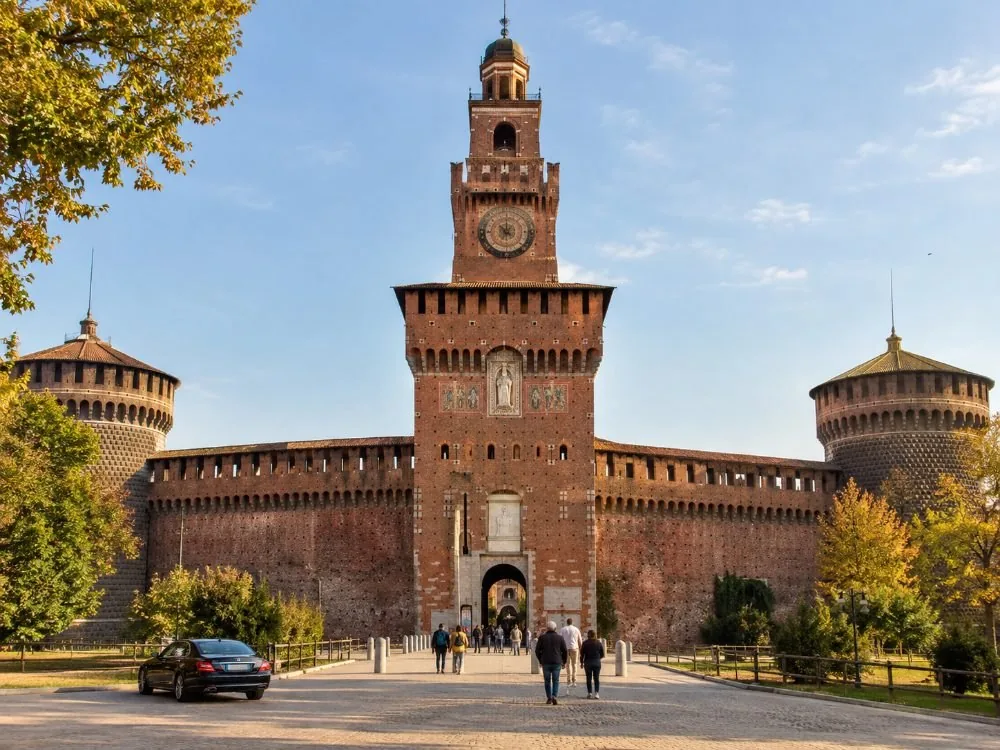
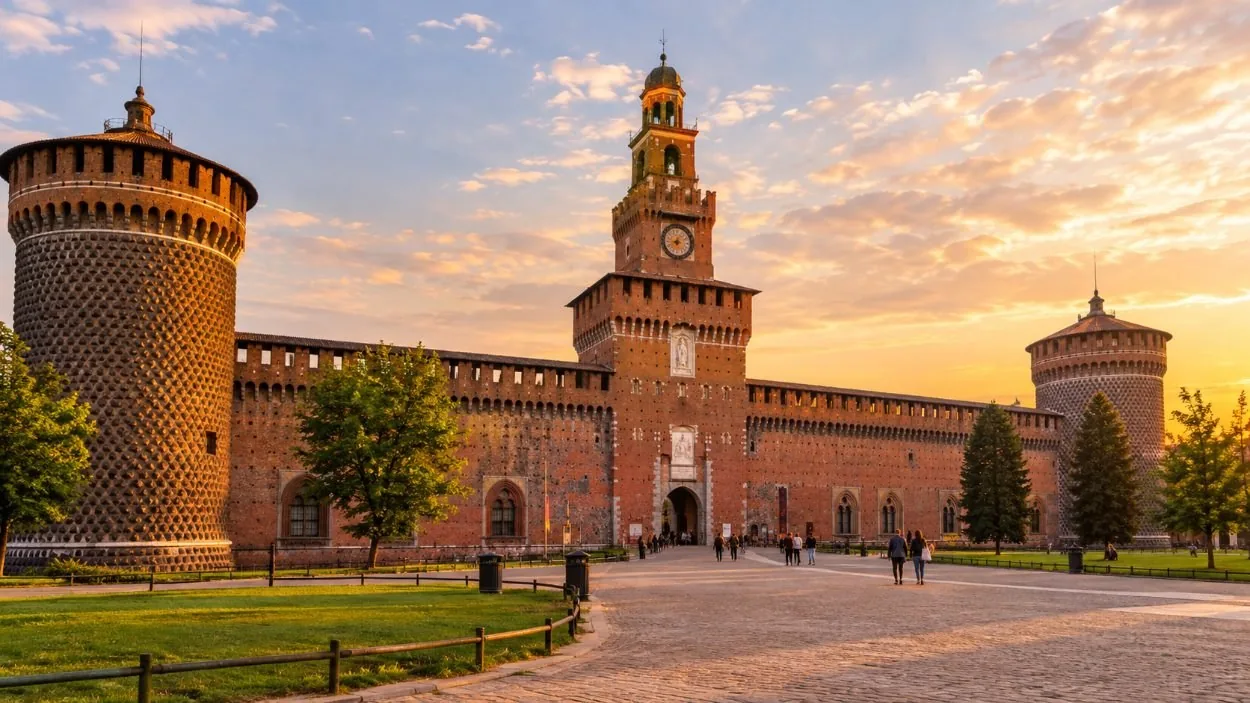
- The Torre del Filarete — Begun in 1452 by Filarete, destroyed in 1521 by the gunpowder stored inside, rebuilt by Luca Beltrami in 1905 and dedicated to Umberto I. It has the clock with the Visconti sun and the statue of Sant’Ambrogio above the arch. Who built it, and when.
- The Piazza d’Armi — The large courtyard you enter through the tower: the fortress’s parade ground, the most photographed spot and the windiest. From here you can see the two round towers facing the city and the Tower of Bona of Savoy from 1477.
- The Corte Ducale — The U-shaped courtyard on the north side, where the dukes lived. In the Portico dell’Elefante, a faded fresco remains with an elephant and a lion; from here the Ponticella di Ludovico il Moro begins, attributed to Bramante, which crosses the moat. Who lived here.
- The Rocchetta — The most fortified part, four floors around a closed courtyard, once accessible only by a single drawbridge. Up to here, you haven’t paid a thing. What remains free.
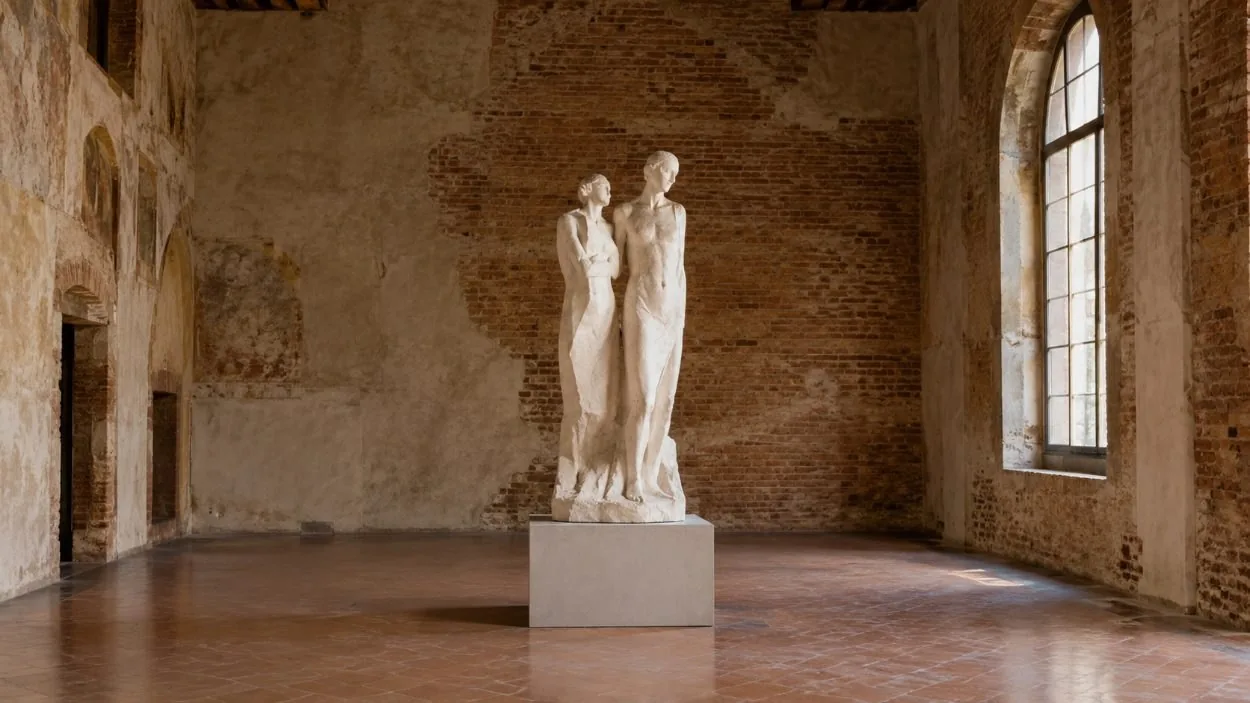
- The Pietà Rondanini Museum — Since 2015 in the former Ospedale Spagnolo: Michelangelo’s final work, unfinished, which he worked on until just days before his death in February 1564, when he was nearly 90. It’s the reason the ticket exists. The Pietà, and what a guide adds.
- The Museum of Ancient Art and the Armoury — Sculptures from late antiquity to the 16th century, the equestrian monument of Bernabò Visconti by Bonino da Campione, the Trivulzio Tapestries of the Months, and the Armoury. The Sala delle Asse is part of this route and is currently closed for restoration. The Sala delle Asse restoration site.
- The Pinacoteca and the other museums — Mantegna’s Madonna Trivulzio, Canaletto, Bellotto, Antonello da Messina, Filippo Lippi. Then decorative arts, furniture, musical instruments, and the Egyptian Museum—best to book ahead. All included in the same ticket. The museums, one by one.
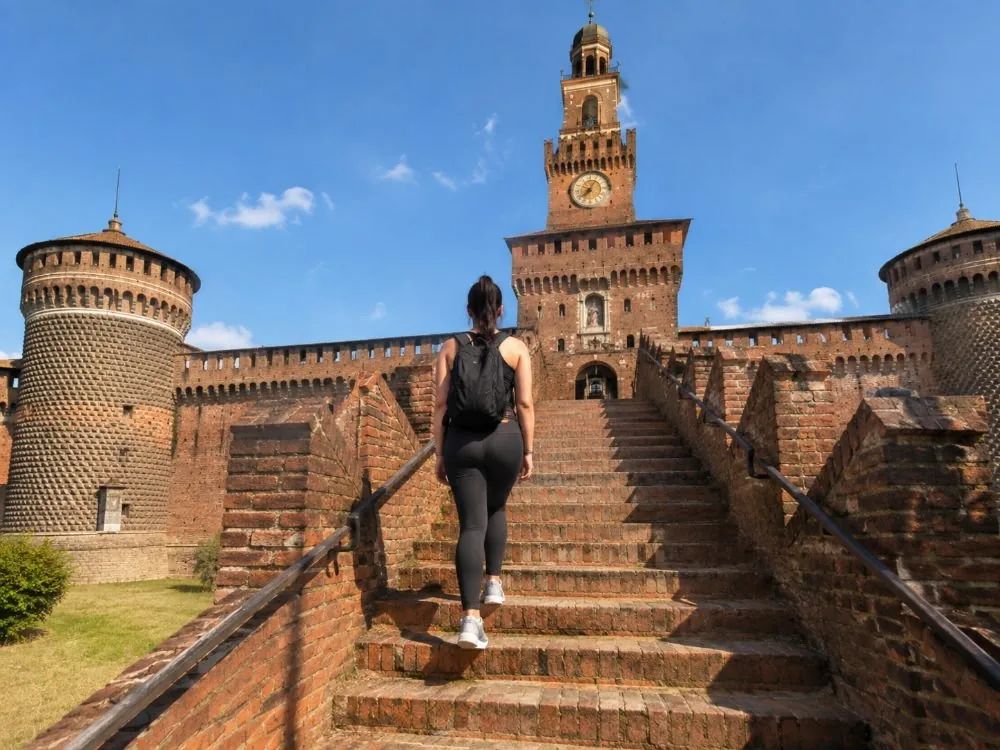
- The battlements, Friday to Sunday — A stretch of the wall walk, about 40 minutes, departures every 20 minutes from 10:00 to 17:00, max 25 people per slot, from the Info Point, included in the museum ticket. There are stairs. The battlements and the Ghirlanda covered walkway.
- Parco Sempione — Exit on the side opposite the city, into the dukes’ former hunting reserve: the Arena Civica, the Aquarium, the Ponte delle Sirenette, and at the far end, the Arco della Pace. There’s no café inside the museums: eat here. The park behind the Castello.
The courtyards take half an hour, the Pietà Rondanini and Ancient Art take an hour and a half, all the museums take three or four hours. What to see, at your own pace, or how much time you really need.
How the booking works
Choose the type, not the title
First decide what you want: the museum ticket with an audio guide in the app, a guide to take you in front of the Pietà, or the Last Supper with a walk through the courtyards. The titles all use the word “tour”; the conditions do not. Which one I would book, and for whom.
Book on GetYourGuide
The buttons lead to GetYourGuide, with instant confirmation. Five out of six options can be cancelled free of charge up to 24 hours in advance; the Last Supper one only up to 3 days in advance, and it requires the names of all participants at the time of booking. If you just want the museum ticket, the Castello’s ticket office sells it at the door. The two options with tickets.
Show up at the right place
The ticket with audio guide is collected at the office at Piazza Castello 1, not at the Castello’s ticket office; the private tour starts at the fountain; the Last Supper tour starts at Piazza Santa Maria delle Grazie 2, five minutes early or you won’t get in. I’ve seen too many people queuing at the wrong counter. How to get there and where to enter.
Check availability and book
The museum entrance ticket with digital audio guide: reserved entry, audio guide for the Castello and the city in six languages, voucher to be collected at Piazza Castello 1, free cancellation up to 24 hours in advance. Valid on museum opening days, from Tuesday to Sunday; closed on Monday, 25 December, 1 January and 1 May. Bring your own headphones and a charged phone. The full details.
Three options compared
Compare the main details of each option at a glance. All six, side by side.
| Milan: Castello Sforzesco entry ticket with digital audio guide | Our pickMilan: Castello Sforzesco and Michelangelo’s Pietà Rondanini tour | Milan: guided tour of the Last Supper and Castello Sforzesco | |
|---|---|---|---|
| What’s included | Museum ticket and app-based audio guide for the Castle and the city | Licensed guide, headphones, entry to the Castle and museums | Skip-the-line for the Last Supper, guide, headphones, walk through the courtyards |
| Enter the museums | Yes, with reserved entry | Yes, starting from the Pietà Rondanini | No: museums are excluded |
| Guide | Audio guide in app; bring your own headphones and phone | One person, in small group | A historical art guide for the Last Supper and the courtyards |
| Duration | Approx. 3 hours | 1 hour and 30 minutes | 2 hours |
| Languages | Italian, English, French, German, Spanish, Chinese | Italian, English, German, French, Spanish | English only |
| Group | On your own, with your phone | Maximum 11 with headphones | Group with headphones; 15 minutes in the Cenacolo room |
| Cancellation | Free until 24 hours before | Free until 24 hours before | Only until 3 days before |
| Book this | Book this | Book this |
Photo gallery
The Castle, courtyard by courtyard
Nine images in the order of the visit, from the square to the park. Tap a photo to enlarge it.
The six options
Two tickets with an audioguide app, three tours with a live guide, and a Last Supper tour that crosses the castle courtyards. The cards are titled “tour” almost always; below each option is described for what it includes. Each option in detail.
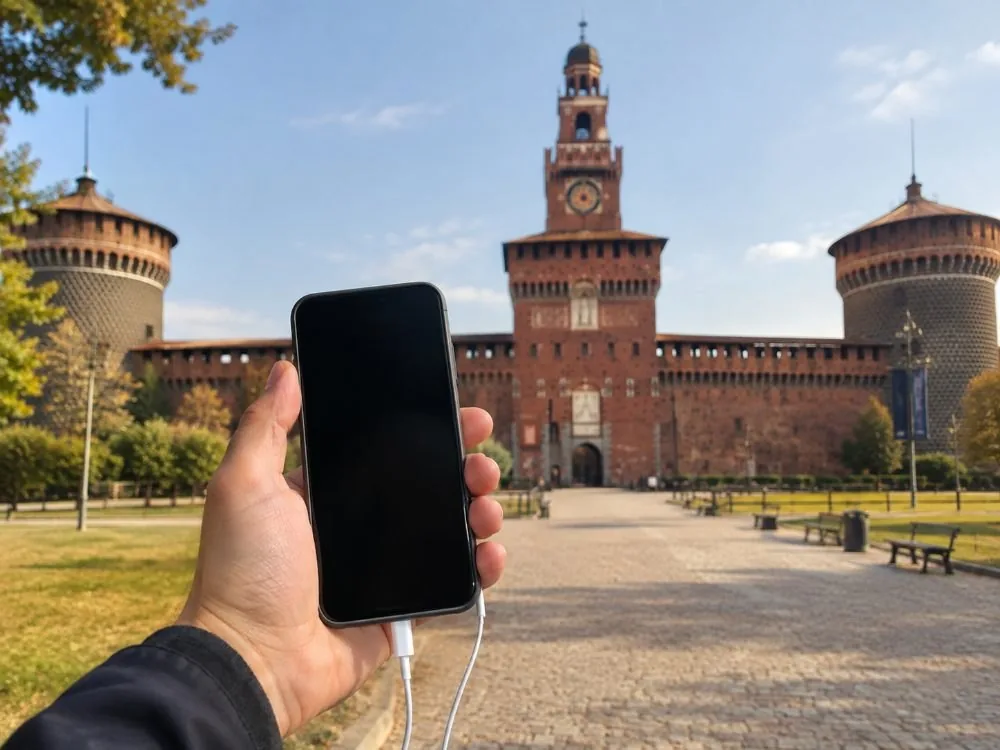 Museum ticket + audioguide app
Milan: Castello Sforzesco entry ticket with digital audio guide
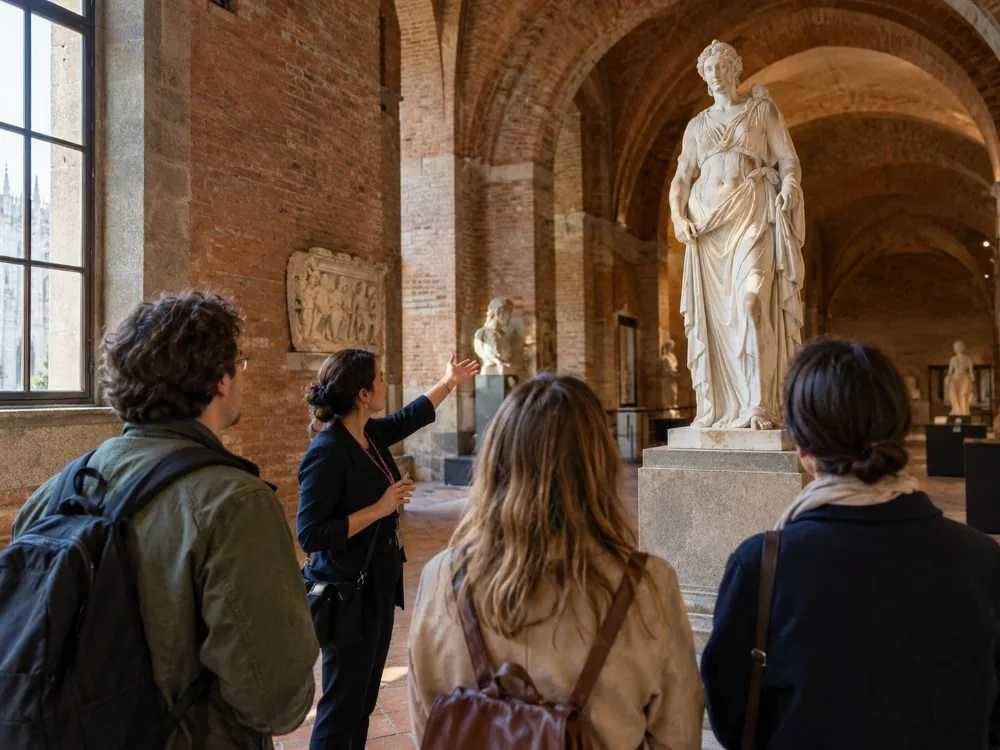 Small group · 5 languages
Milan: Castello Sforzesco and Michelangelo’s Pietà Rondanini tour
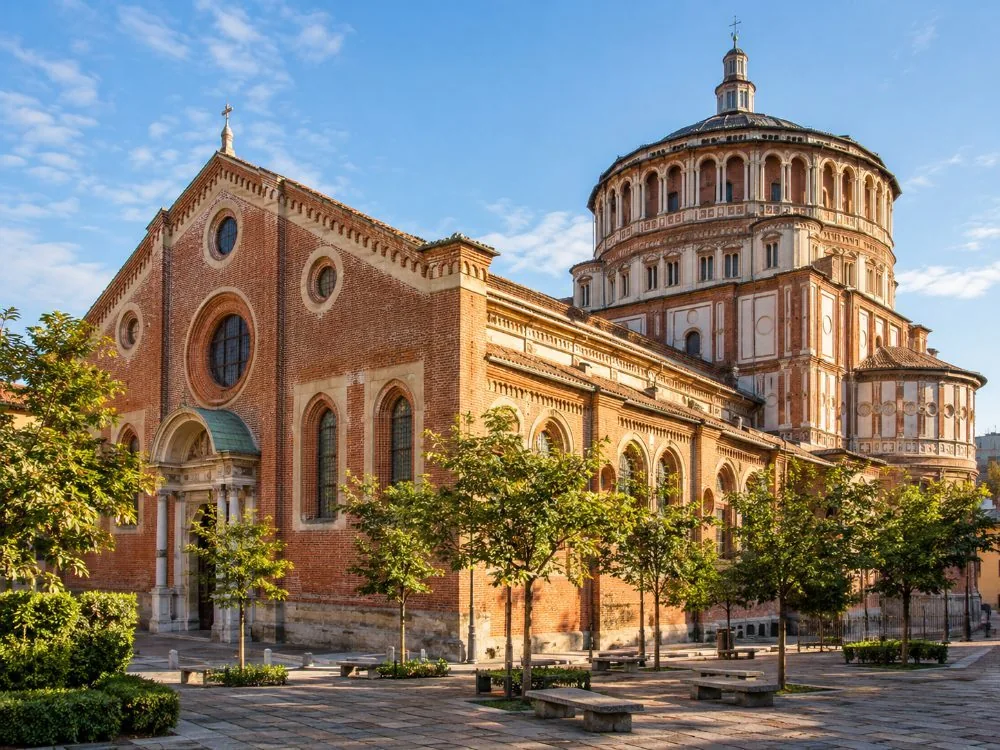 Courtyards only, not the museums
Milan: guided tour of the Last Supper and Castello Sforzesco
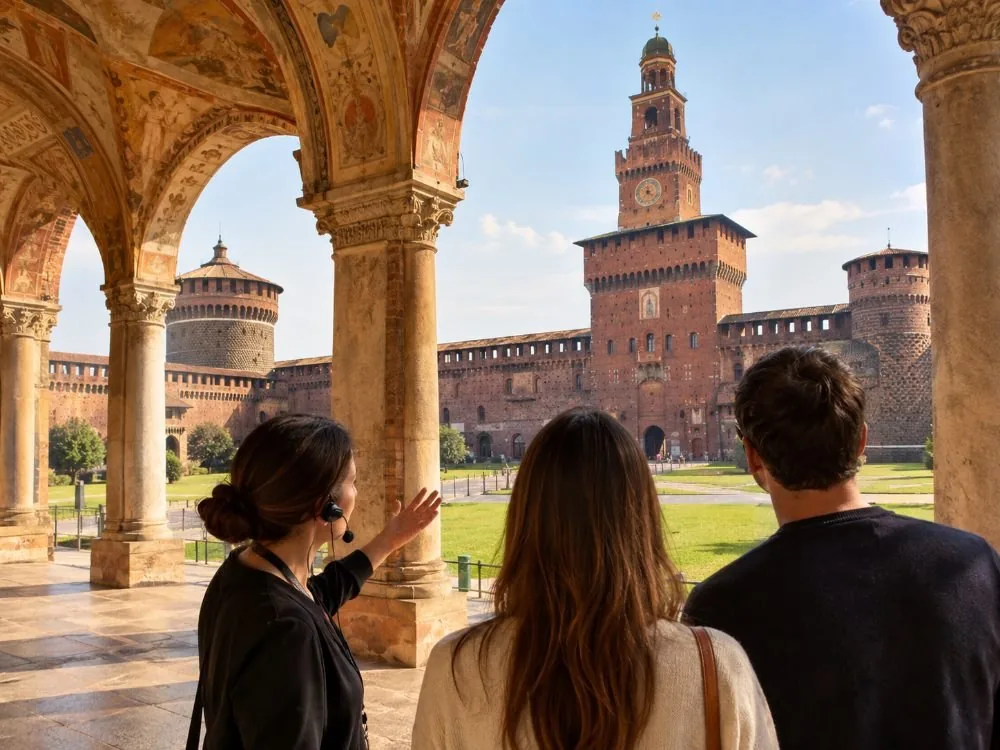 Private · 6 languages
Milan: private guided tour of Castello Sforzesco
 Private · 2 to 5 hours
Milan: private skip-the-line tour of Castello Sforzesco and its museums
 Ticket + audioguide, with Merlate panoramiche option
Castello Sforzesco entrance ticket with audioguide
Five questions I was asked at the Info Point
Six seasons at the ticket desk, three years in the courtyards with school groups. The questions were always the same, and the answers are short.
Why is Castello Sforzesco famous?
Because it was the court of the Visconti and then the Sforza, with Ludovico il Moro among the richest of its time, and because Leonardo worked there for nearly twenty years. Today it’s famous above all for the Pietà Rondanini, Michelangelo’s final work, which has been in its museums since 2015. The long answer.
Who built the tower of Castello Sforzesco?
It depends on which tower. The two round towers facing the city were built by Bartolomeo Gadio in 1452 for Francesco Sforza. The central tower was started by Filarete in the same year, exploded in 1521, and the one you see today is Luca Beltrami’s 1905 reconstruction. The towers, one by one.
Who lived in Castello Sforzesco?
First the Visconti, who built it as Castello di Porta Giovia between 1360 and 1370; then the Sforza, from Francesco in 1450 to Ludovico il Moro, in the Corte Ducale and the Rocchetta. After 1535, the Spanish and Austrians turned it into a barracks. Who lived there, in order.
Who owns the Castello today?
The City of Milan, which has housed the Civic Museums there since the late 19th century. That’s why museum tickets are bought at the Castello ticket office and are free for everyone on the first Sunday of the month. The owner, and what it means for you.
What does Sforzesco mean?
The Sforzas, the dukes of Milan in the 15th and 16th centuries. The castle that Francesco Sforza rebuilt from 1450 on the ruins of the Visconti one took the family’s name—and has never lost it. The word, and where it comes from.
The dates don’t work for you?
Browse other available options for Castello Sforzesco tours and tickets and find the one that fits your schedule, with instant confirmation and free cancellation.
The Castello Sforzesco, explained
I grew up in the Sempione area, worked six seasons at the Info Point and the castle’s ticket office, then spent three years guiding school groups through the courtyards. I’ve seen the same scene hundreds of times: a family queuing at the wrong office, a group arriving on Monday with museum tickets in hand, a couple who’d paid a guide for a courtyard they could have entered on their own.
The fortress is free, the museums are not
The Castello has two schedules and two rules. The courtyards—that is, the Piazza d’Armi, which you enter through the Torre del Filarete, the Corte Ducale where the dukes lived, and the enclosed courtyard of the Rocchetta—are open every day from 7:00 to 19:30 and cost nothing. There’s no turnstile and no ticket.
The museums are a different matter. A single ticket covers them all, from Tuesday to Sunday from 10:00 to 17:30, with the ticket office closing at 16:30 and last entry at 17:00. They’re closed on Mondays, as well as on December 25, January 1, and May 1. That ticket is sold at the castle’s ticket office and at the civic museums’ online shop; it’s free for everyone on the first Sunday of the month, always free under 18, and free under 25 on the second Tuesday of the month. It won’t sell out. Nothing in this building requires an online reservation to enter. What’s free and when.
Three types of offer, and who gets into the museums
The ticket is bought at the entrance, so the six online offers sell three different things, and it’s worth distinguishing them before reading the titles, which almost all use the word “tour”.
Two options sell the same museum ticket with a downloadable audio guide for your phone. The voucher is picked up at the office at Piazza Castello 1, not at the castle ticket office, and you bring your own headphones and charged phone. One of the two adds, optionally, a walk on the merlons, which involve stairs, and states it is not suitable for those with mobility issues. Neither is a guided tour.
Three offers sell a live guide, which is the only thing the ticket office cannot provide. The small-group tour lasts an hour and a half, with headsets for up to 11 people and museum entry included, and starts in front of the Pietà Rondanini. The private tour lasts two hours, starts at the fountain and ends in front of the Pietà; the operator may cancel it after confirmation if too few people have signed up. The private skip-the-line tour runs from 2 to 5 hours, with one licensed guide per maximum of 9 people, and in the longer versions adds a private car and the Basilica of Sant’Ambrogio. The six offers, divided by type.
The sixth option is a tour of the Last Supper. Skip-the-line ticket for The Last Supper at Santa Maria delle Grazie, 15 minutes in the room, an art history guide, then a 15-minute walk to the Castello, where you visit the courtyards. The museums are excluded, and the description states this. It’s only in English, requires the names of all participants at booking, and offers free cancellation only up to 3 days before. It’s a good tour of the Last Supper. It’s not a way to access the Castello’s museums.
The Pietà is the reason for the ticket
When people at the ticket desk asked me if it was worth paying, I’d answer with a question: do you want to see the Pietà Rondanini? Michelangelo worked on it until just days before his death in February 1564, when he was almost 90. It’s unfinished, the figures are elongated, and since 2015 it has been housed in the former Ospedale Spagnolo, with its museum. If the answer is yes, the ticket is worth it, and a guide in front of that sculpture makes it even more so, because the unfinished is best understood when someone points it out. The same ticket gets you into the Museum of Ancient Art with the Armoury, the Pinacoteca with Mantegna’s Madonna Trivulzio, and the other museums. The Pietà Rondanini.
The Sala delle Asse is closed
Many come for Leonardo. He worked at the court of Ludovico il Moro for nearly twenty years, and in 1498 he painted a pergola of eighteen mulberry trees with knotted golden ropes in the Sala delle Asse: the mulberry, the ‘moro’, was the duke’s emblem. The room was whitewashed for centuries, rediscovered by Beltrami in 1893, repainted by Ernesto Rusca in 1902, and since 2012 it has been under scientific restoration. In 2026 it is closed; the museum has organized visits to the scaffolding, and the goal is to reopen it around the Milano Cortina 2026 Winter Olympics. None of the six options promise it, and I won’t promise a date. Today, in the museums, you won’t see any Leonardo: the Pietà is by Michelangelo and the ducal apartments are from Bramante’s era. The Sala delle Asse restoration site.
The day, in practice
You can reach it by taking the M1 to Cairoli-Castello, a two- or three-minute walk, or the M2 to Lanza or Cadorna; from the Duomo it’s a kilometer along Via Dante, about 15 minutes. The main entrance is the Torre del Filarete; the one on the Cadorna and park side is quieter. There’s a security check in the museums, and no cafés: eat before or after in the park. The courtyards are flat; the museums are a multi-level fortress, and it’s best to ask for the accessible route at the Info Point.
The best day is a Tuesday, Wednesday or Thursday afternoon. Late Saturday morning and the first Sunday of the month—which is free—are the busiest times. From Friday to Sunday, the Castello independently manages the walk along the Merlate panoramiche, about 40 minutes from the Info Point, included in the museum ticket. On Mondays, you can only visit the courtyards and the park. Which tour I’d book, and for whom.
Frequently asked questions
What is there to see at Castello Sforzesco?
Free: Torre del Filarete, Piazza d’Armi, Corte Ducale with the Portico dell’Elefante and the Rocchetta courtyard, every day from 7:00 to 19:30. With a ticket: Michelangelo’s Pietà Rondanini, the Museum of Ancient Art with the Armoury and the equestrian monument of Bernabò Visconti, the Picture Gallery with Mantegna’s Madonna Trivulzio, decorative arts, furniture, musical instruments, and the Egyptian Museum. Leonardo’s Sala delle Asse is closed for restoration. The visit in order and each museum individually.
Is it possible to visit Castello Sforzesco for free?
The courtyards are open every day from 7:00 to 19:30, no ticket required. The museums are free for everyone on the first Sunday of the month, which is also the busiest day of the year; always free for under 18s; free for under 25s on the second Tuesday of the month. Online offers do not sell free days: they sell tickets with an audio guide or a guide. What is free and when.
How long does it take to visit Castello Sforzesco?
Half an hour to cross the courtyards from Piazza Castello to Parco Sempione. An hour and a half for the Pietà Rondanini and the Museo d’Arte Antica, which is the visit I recommend for an afternoon. Three or four hours for all the museums. The ticket office closes at 16:30 and the last entry is at 17:00, so the full tour must start in the morning. Three itineraries with times.
What is inside Castello Sforzesco?
The Civic Museums of the City of Milan, housed here since the late 19th century: Museo d’Arte Antica and Armoury, Museo della Pietà Rondanini, Pinacoteca, Museo delle Arti Decorative, Museo dei Mobili e delle Sculture Lignee, Museo degli Strumenti Musicali, and the Archaeological Museum with its Egyptian section. There is also the Biblioteca Trivulziana, with Leonardo’s Codice Trivulziano, and the civic archives, which are not museums. There is no café inside the museums. The short answer.
How old is Castello Sforzesco?
The first castle, Castello di Porta Giovia, was built by Galeazzo II Visconti between 1360 and 1370. It was partially demolished by the Ambrosian Republic between 1447 and 1450 and rebuilt by Francesco Sforza starting in 1450. Much of what you see today, however, is the restoration by Luca Beltrami between 1893 and 1905, tower included. The dates, in order and the full history.
Who restored Castello Sforzesco?
Luca Beltrami. After 1861 the castle was a barracks and there was talk of demolishing it; Beltrami directed the demolition of the Ghirlanda from August 1892 and the restoration work from 1893 to 1905, reconstructing the Torre del Filarete based on period paintings and the castle of Vigevano. In 1893 he rediscovered Leonardo’s Sala delle Asse beneath the whitewash. After the 1943 bombings, the museums were refitted by the BBPR studio. Beltrami’s restoration.
What is the distance between Castello Sforzesco and the Duomo of Milan?
About one kilometer, a 15-minute walk along Via Dante, which is pedestrian-only and leads straight to the Torre del Filarete. By metro, the stop is Cairoli-Castello on the red line, two or three minutes from the entrance. The route from the Duomo and how to get there.
What is the name of the square of Castello Sforzesco?
Piazza Castello, with the semicircle of Foro Bonaparte in front. The central fountain, the “wedding cake,” dates from 1936 and was reconstructed in 1999/2000. On the square there are two ticket offices that should not be confused: the Castello ticket office for museum tickets, and the office at Piazza Castello 1, where you collect the voucher for tickets with audioguides bought online. The square and the two ticket offices.
Still have questions? Email us at [email protected]