What’s inside Castello Sforzesco
The free area
From the Torre del Filarete you enter the Piazza d’Armi, the large brick courtyard. At the far end, towards the park, are the Corte Ducale, where the dukes lived, and the Rocchetta, the fortified stronghold with its arcaded courtyard. This is the castle everyone photographs, and it is open every day from 7:00 to 19:30. Visit in order, courtyard by courtyard.
The ticketed section
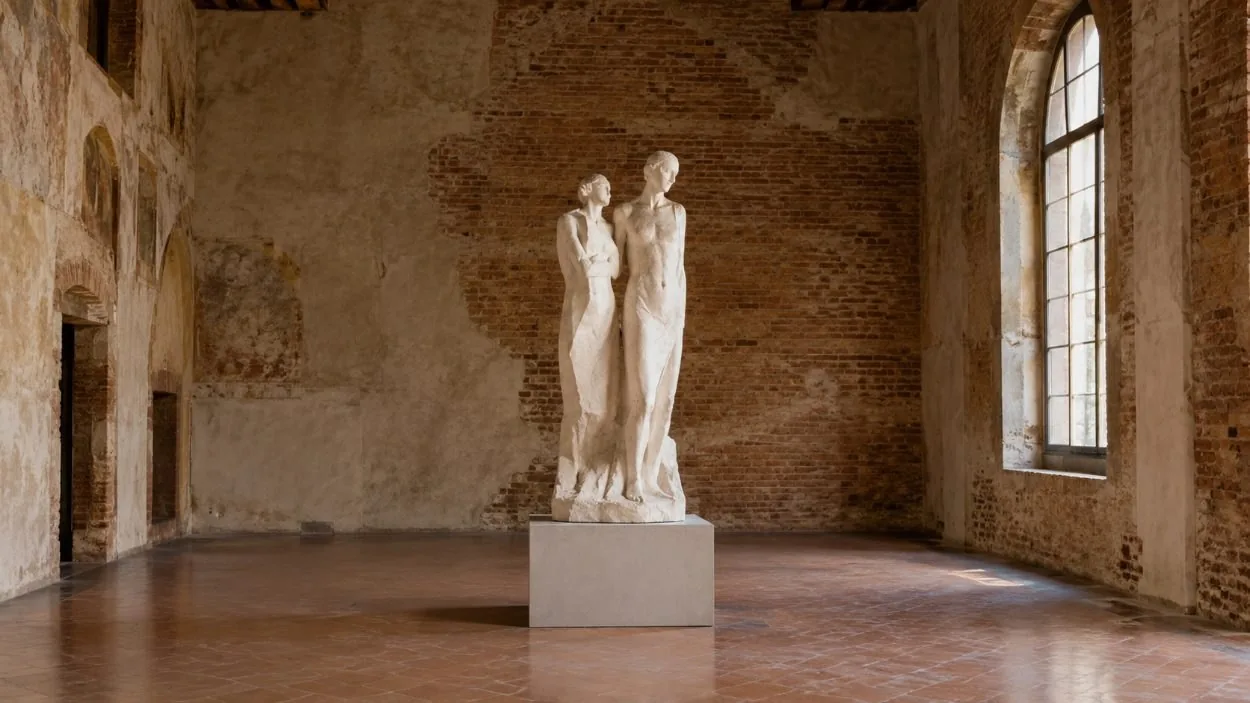
The Civic Museums have been in the castle since the late 19th century. The Museum of Ancient Art houses sculpture from late antiquity to the 16th century, the equestrian funeral monument of Bernabò Visconti, the Armoury and the Trivulzio tapestries of the Months by Bramantino. Michelangelo’s Pietà Rondanini has had its own museum since 2015, in the former Ospedale Spagnolo. The Pinacoteca features works by Mantegna, Antonello da Messina, Filippo Lippi, Correggio, Canaletto, Bellotto and Tiepolo. Then there are the Decorative Arts, Furniture, Musical Instruments and Archaeology, with Prehistory and the Egyptian Museum. Each museum, what it contains and which may be closed.
Two things to know before you pay. The Sala delle Asse by Leonardo is closed for restoration, and no tour can show it to you. And there is no café inside the museums: eat beforehand or in the park. The ticket, one for all routes, can be bought at the castle ticket office or on the Civic Museums’ online shop, from Tuesday to Sunday from 10:00 to 17:30; the museums are closed on Mondays. It is free for under-18s, for everyone on the first Sunday of the month, and for under-25s on the second Tuesday. From Friday to Sunday, the same ticket grants access to the Merlate panoramiche, the walkway along the walls starting from the Info Point. What is free and when.
What is not a museum
The Biblioteca Trivulziana, with Leonardo’s Codice Trivulziano, the Archivio Storico Civico, the Bertarelli Print Collection, the Photographic Archive and the Cabinet of Drawings are all housed in the castle. They are research institutions, not exhibition spaces; don’t expect to see Leonardo’s codex just by walking in.
If you want someone to take you inside with structure and explanation, the 90-minute guided tour starts at the Pietà and includes the museum ticket.
Inside, with a guide
Small group, certified guide, from the Pietà Rondanini to the Corte Ducale and the Rocchetta, museum entry included, meeting point in Piazza Castello.
Frequently asked questions
How many museums are there in Castello Sforzesco?
Seven, counting the Archeological Museum as one: Ancient Art and Armory, Pietà Rondanini, Art Gallery, Decorative Arts, Furniture and Wooden Sculptures, Musical Instruments, Archeological with Prehistory and Egyptian Museum. One ticket covers them all. One by one.
Can you enter the castle without visiting the museums?
Yes, the courtyards are free every day from 7:00 to 19:30 and you can walk through to Parco Sempione. What’s free.
Is there anything by Leonardo to see?
Not at the moment: the Sala delle Asse is closed for restoration and the Codice Trivulziano is in the library, not on display. The Pietà is by Michelangelo. The room’s status.