What to see at Castello Sforzesco, in order
Piazza Castello and the fountain
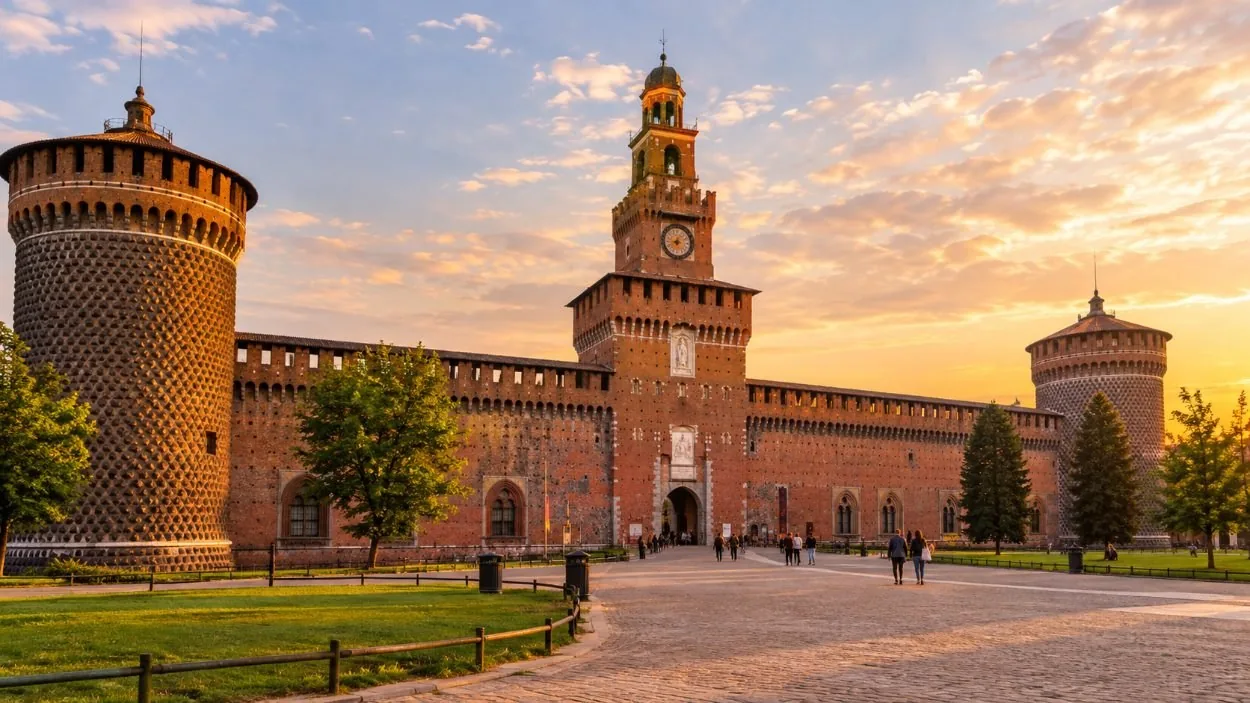
The castle isn’t visited, it’s crossed, and you start from the square. The fountain in front of the tower—the wedding cake—dates to 1936, removed in the 1960s and reinstalled between 1999 and 2000. From here you can see the city-facing façade: the two round towers with diamond points and, between them, the tower. The square has its own page, because it’s where you queue at the wrong ticket window.
The Torre del Filarete
The tower you see is not the 15th-century original: that one, begun in 1452 by Filarete, blew up in 1521 with the gunpowder stored inside. This is Luca Beltrami’s 1905 reconstruction, with the clock, the octagonal loggia and the statue of Sant’Ambrogio above the arch. Who built it, in brief. You can walk under it without a ticket.
Piazza d’Armi
Beyond the arch lies the large, open brick courtyard. This is where most visitors stop, take photos, and leave, and it’s open to all from 7:00 to 19:30. At the far end, between Piazza d’Armi and the Rocchetta, stands the Torre di Bona di Savoia, dating to 1477.
The Corte Ducale and the Rocchetta
On the north side, facing the park, the U-shaped Corte Ducale was the dukes’ residence. In the Elephant’s Portico, a faded fresco of an elephant and a lion remains. Next to it, the Rocchetta is the inner fortified keep, four stories high, once accessible only by a single drawbridge, with arcades on all four sides. All of this is free. If you only have half an hour, spend it here.
On Mondays, the courtyards are open and the museums are closed. If you arrive on a Monday, tour the courtyards and save the museums for another day, or head straight to the park.
The museums, starting with the Pietà
A single ticket covers all the castle’s museums, from Tuesday to Sunday, 10:00–17:30, last entry at 17:00. The full list, museum by museum, it’s long; if time is short, there’s only one right order. First, the Pietà Rondanini, Michelangelo’s final work, in the museum set up in the former Ospedale Spagnolo in 2015. Then the Museo d’Arte Antica with the Armory and the equestrian monument to Bernabò Visconti. Then, if time allows, the Pinacoteca with Mantegna’s Madonna Trivulzio.
One thing you won’t see: the Sala delle Asse by Leonardo, closed for restoration. None of the six options include it, and you’re right to distrust anyone who adds it to the itinerary.
Outside, toward Parco Sempione
You exit on the side opposite the city, where the dry moat and brick walls overlook the meadows. Parco Sempione was the dukes’ hunting reserve and is now the city’s park, with the Arch of Peace at the far end. If you didn’t eat much, this is where to fix that, since there’s no café inside the museums.
With a guide in front of the Pietà
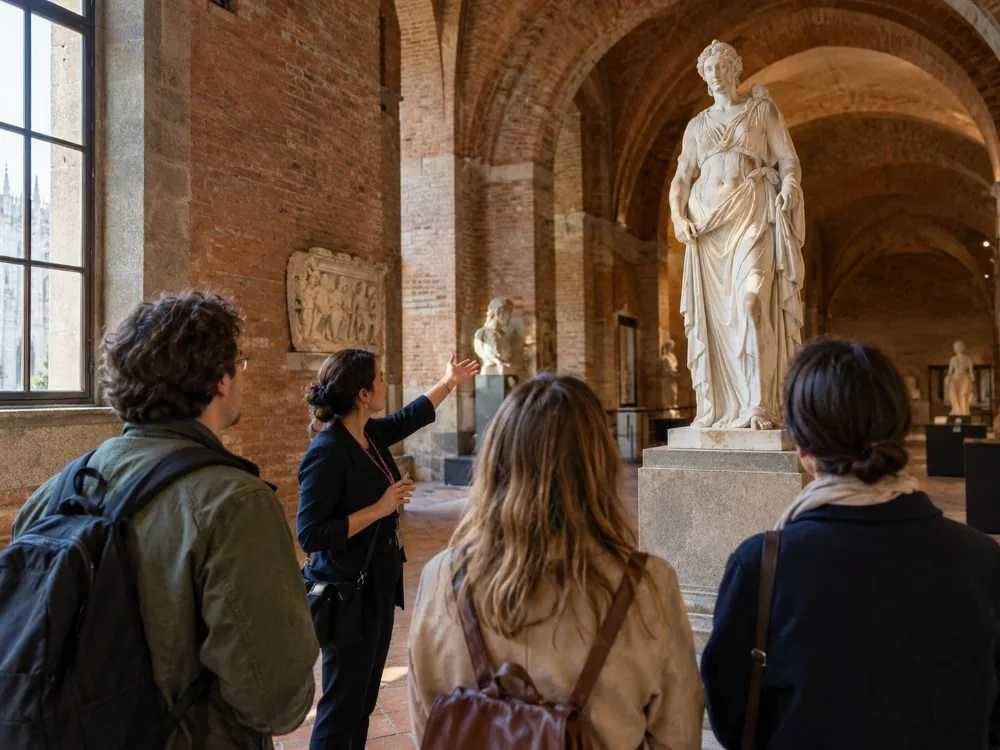
The one thing the castle ticket office can’t sell you is a person to explain it all. This small-group, 90-minute tour starts at the Pietà and ends in the courtyards with the Visconti, the Sforza, the Biscione and the tower, admission included. Guided tours, explained.
 Small group · 5 languages
Milan: Castello Sforzesco and Michelangelo’s Pietà Rondanini tour
 Museum ticket + audioguide app
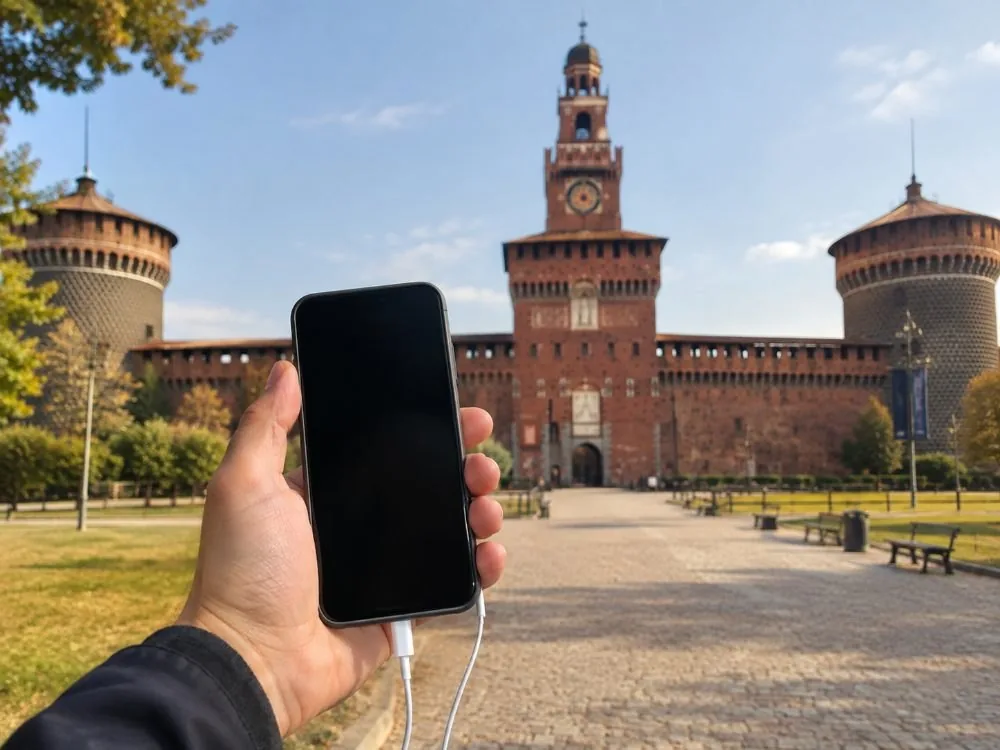
Milan: Castello Sforzesco entry ticket with digital audio guide
 Private · 6 languages
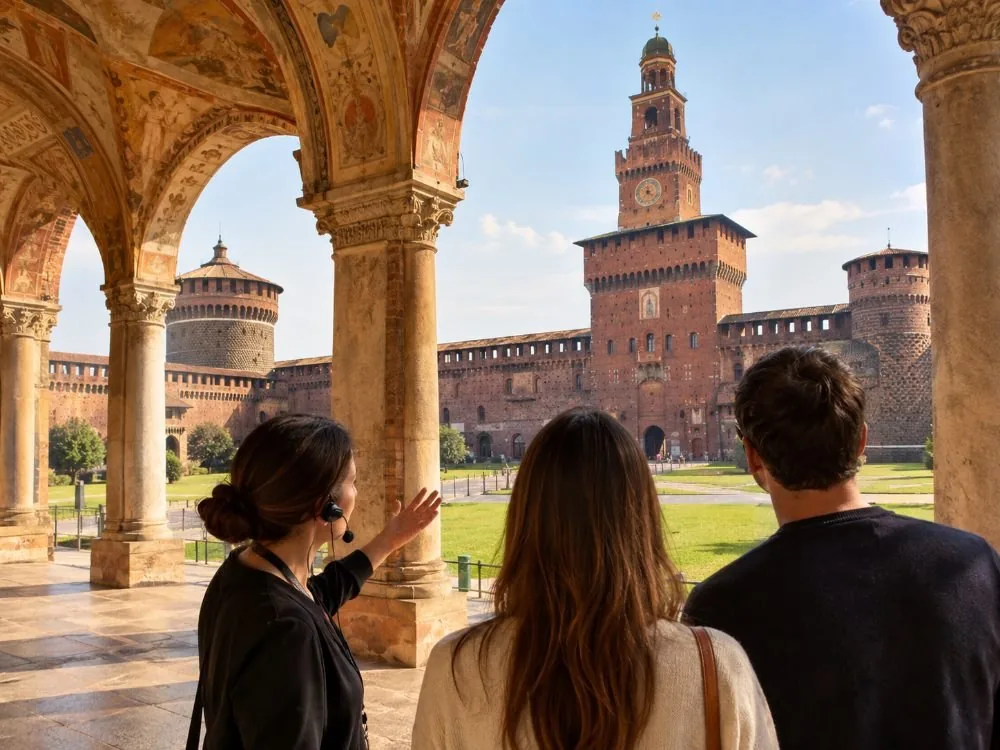
Milan: private guided tour of Castello Sforzesco
The guided tour starting at the Pietà
90 minutes with a certified guide, from Pietà Rondanini to the courtyards, museum admission included, meeting point in Piazza Castello, free cancellation up to 24 hours in advance.
Frequently asked questions
What can you see for free at Castello Sforzesco?
The Torre del Filarete, Piazza d’Armi, Corte Ducale, Rocchetta and the passage to Parco Sempione, every day from 7:00 to 19:30. The ticket is only required for the museums. What’s free and when, in detail.
What is the most important thing to see inside?
The Pietà Rondanini, Michelangelo’s final, unfinished sculpture, in its museum in the former Ospedale Spagnolo. If you enter the museums for just one thing, this is it. The Pietà, explained.
Can you see Leonardo’s Sala delle Asse?
No, it is closed for restoration; the stated goal is to reopen it around the Milano Cortina 2026 Winter Olympics, with no confirmed date. The latest on the room.
How much time do you need to see everything?
Half an hour for the courtyards, an hour and a half for the Pietà and the Museum of Ancient Art, three or four hours for all the museums. Itineraries with timings.
Do you need to book to enter?
No: the courtyards are free to enter and museum tickets can be bought at the door, with no risk of selling out. Online, you can book a guide or the audioguide app. When it’s worth it.