What does ‘sforzesco’ mean
The word
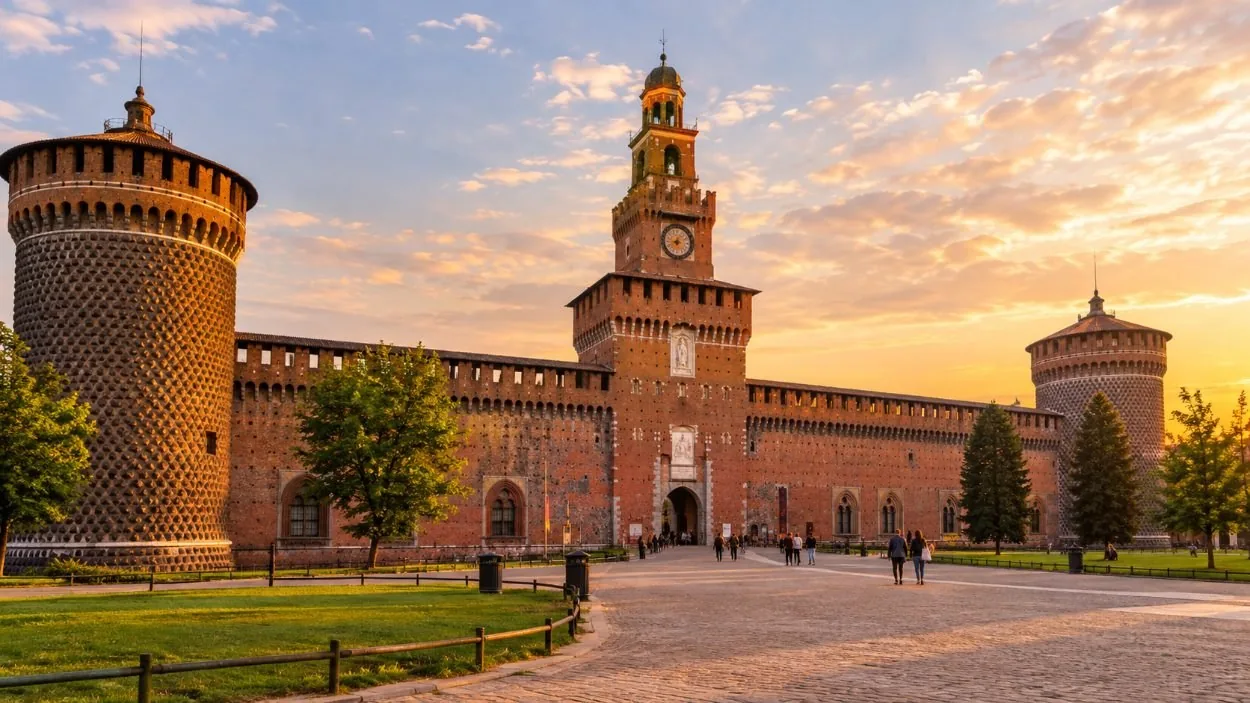
It’s a possessive adjective, like Visconti’s visconteo: sforzesco refers to what belongs to or dates back to the Sforza, the dukes of Milan between the 15th and 16th centuries. Hence castello sforzesco, corte sforzesca, età sforzesca. The first castle, built by Galeazzo II Visconti between 1360 and 1370, was the Castello di Porta Giovia, named after the city gate it abutted. The history, in dates.
The Sforza, in brief
Francesco Sforza rebuilt the castle from 1450. Galeazzo Maria Sforza expanded it with Benedetto Ferrini. Ludovico Maria Sforza, known as il Moro, hosted Leonardo at court from 1494, who in 1498 painted the Sala delle Asse with a mulberry arbor: the mulberry tree, moro in Italian, was the duke’s emblem. In 1535–36, under Charles V, Milan passed to Spain and the Sforza exited the stage; the name remained with the Castello Sforzesco. Who lived there.
A confusion to clear up
The Villa Sforzesca of Castell’Azzara, in Tuscany, built in 1576, was constructed for Cardinal Alessandro Sforza: a different branch of the family and a different century. It has nothing to do with Milan. Where the Milanese Sforza lived.
Frequently asked questions
Why is it called Castello Sforzesco?
From Francesco Sforza, who rebuilt it starting in 1450. How old it is, layer by layer.
What was it called before?
Castello di Porta Giovia, from 1360–1370 under the Visconti.
Who was il Moro?
Ludovico Maria Sforza, duke from 1494, the patron of Leonardo’s Sala delle Asse. The room.