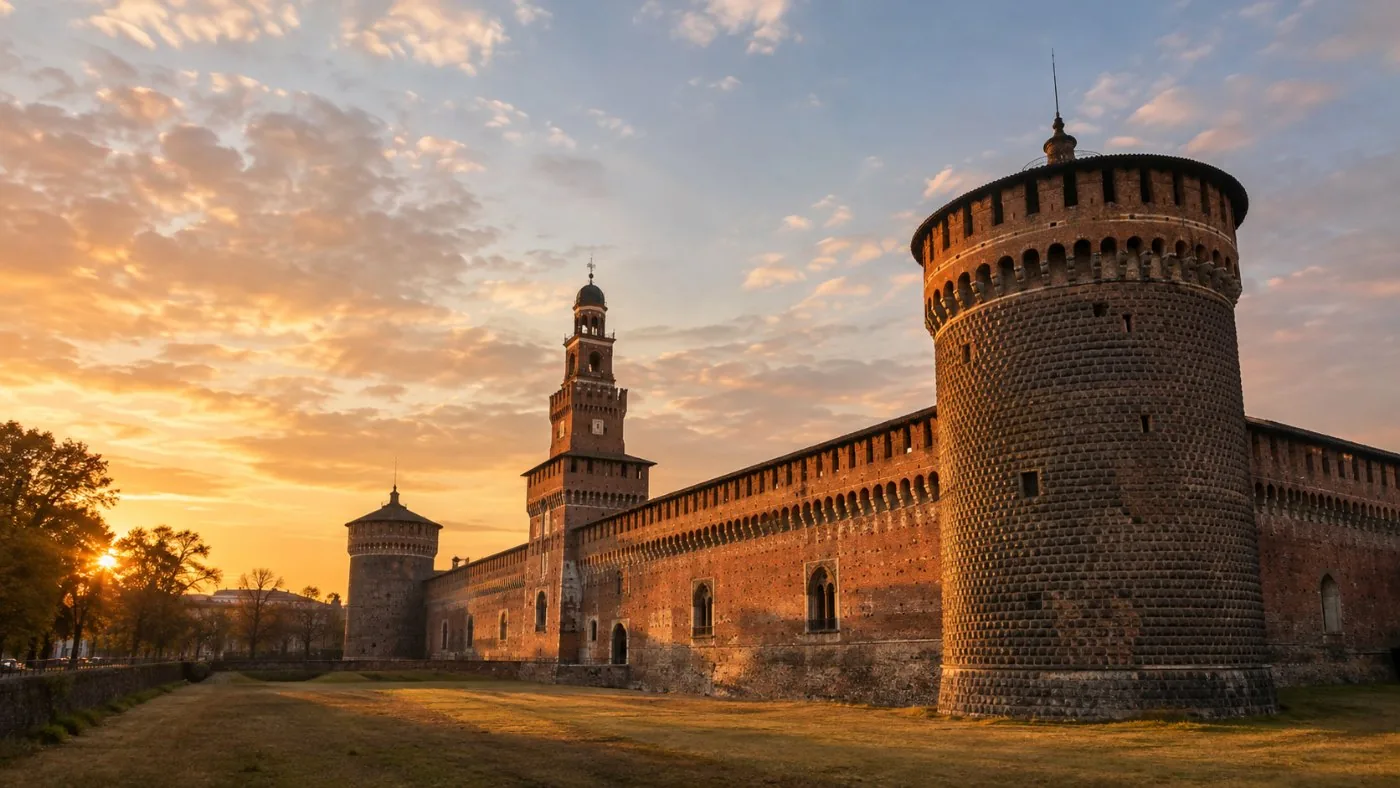
The red-brick fortress of Milan's dukes, ten minutes from the Duomo, with free courtyards and seven museums inside.
Walk in under Filarete's tower, face Michelangelo's last Pietà, then climb the battlements above the rooftops.
Free or paid, spelled outCourtyards, museums and walls, one by one
Inside or outside?Which tours enter the museums and which stop in the courtyard
2026 rules checkedThe €10 ticket, new free days and opening hours
Free cancellationUp to 24 hours before on most tours here
Tickets & tours
Choose your Sforza Castle visit
In the centre, the guided tour that takes you inside the museums to the Pietà Rondanini. Left, the cheapest
reserved entry with an app audio guide. Right, the Last Supper first, then the castle courtyards.
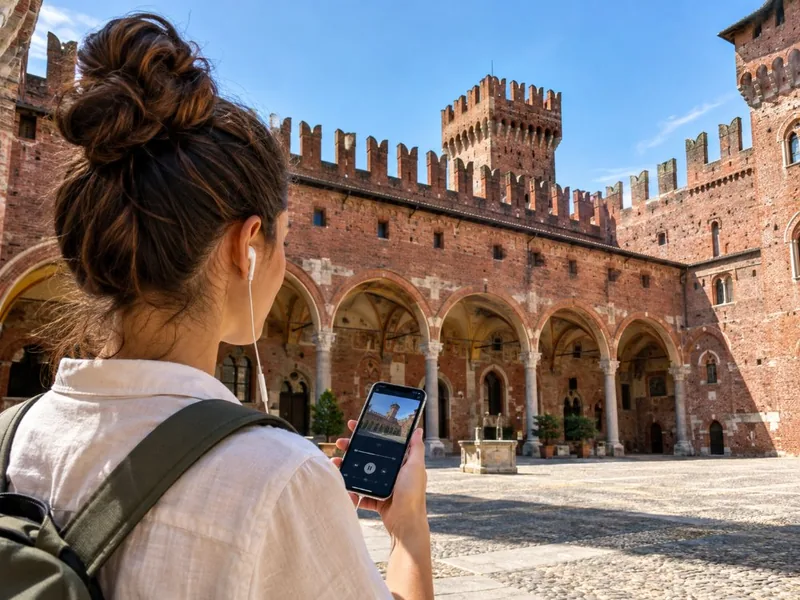
A reserved entry to every castle museum plus an audio guide that plays on your own phone. The door ticket costs €10, so you pay extra for the app and a fixed entry.
What's included
Reserved entry to all the castle museums
App audio guide in six languages, plus a Milan city audio tour
Voucher swapped at the Autostradale office, Piazza Castello 1
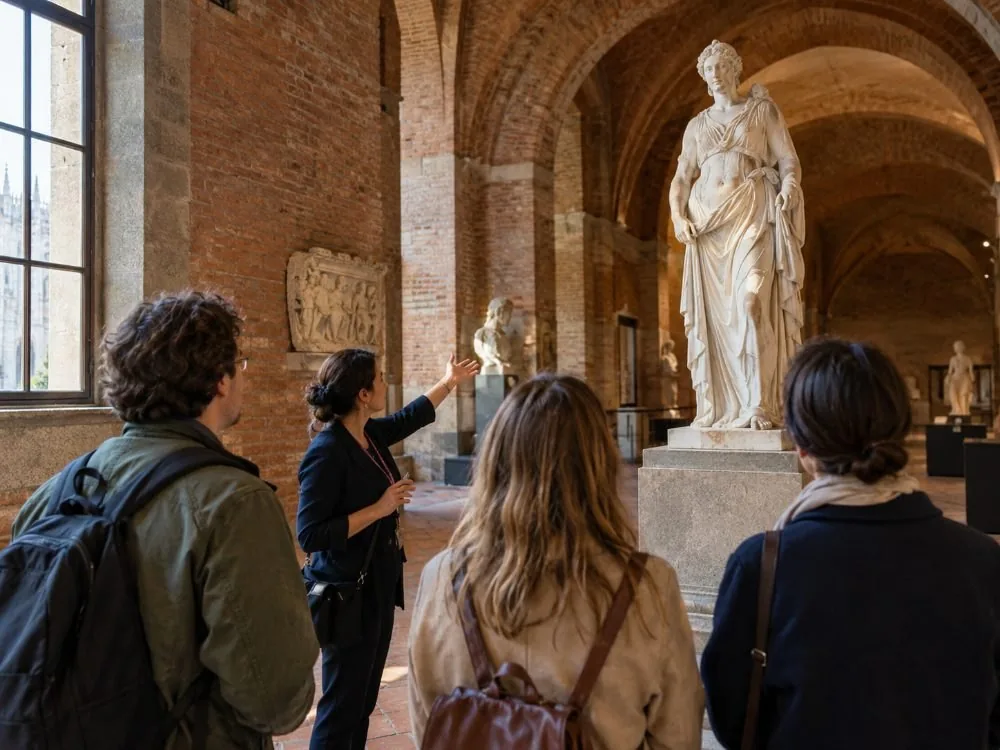
A live guide walks you through the ducal courtyards and into the museums, ending at Michelangelo's last sculpture. Castle and museum entry are included, with headphones.
What's included
Castle and museum entrance fees
Certified guide, live in English, Italian, German, French or Spanish
The question most listings skip: do you actually go inside? Half the tours with "Sforza Castle" in the name are
Last Supper tours that end in the free courtyards.
At the castle ticket office the museum ticket is €10 (€5 reduced, free under 18). The courtyards
cost nothing. Most tours here cancel free up to 24 hours before; the Last Supper tours ask for 3 days.
Before you pay
The gate is open. The rooms are not.
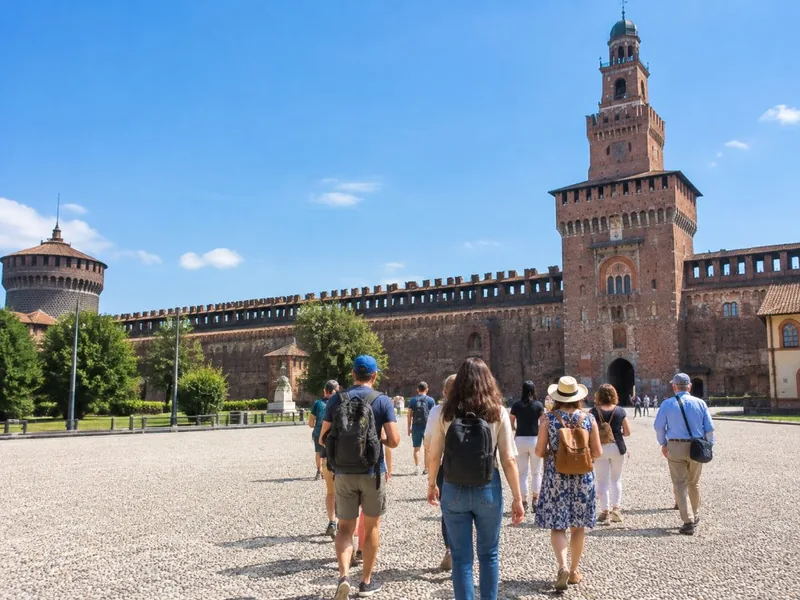
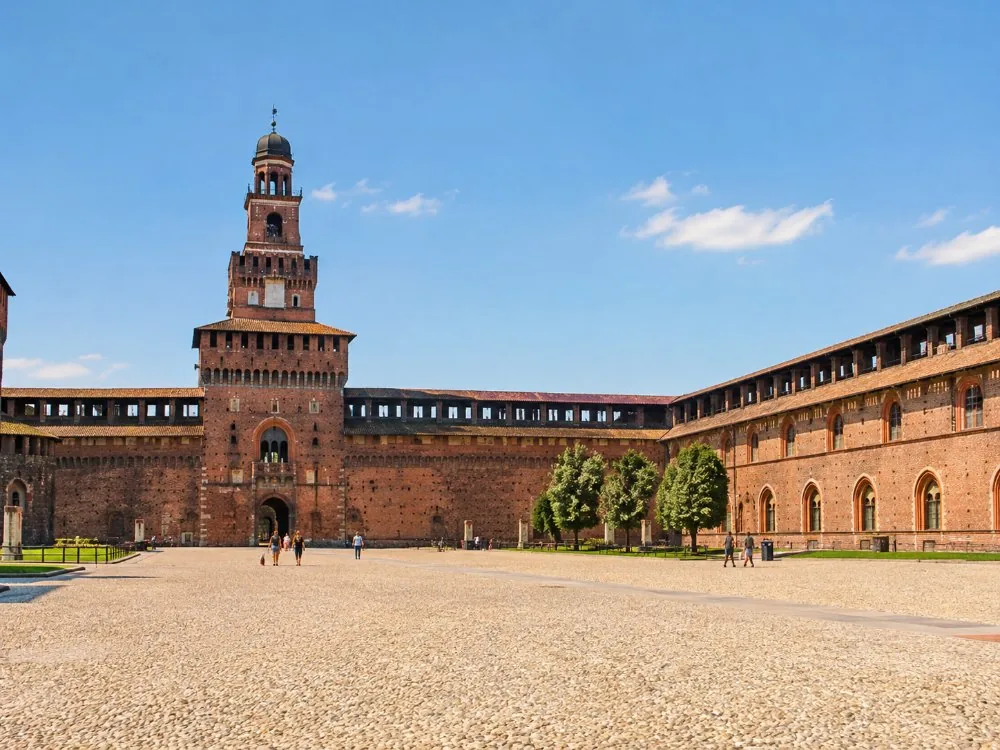
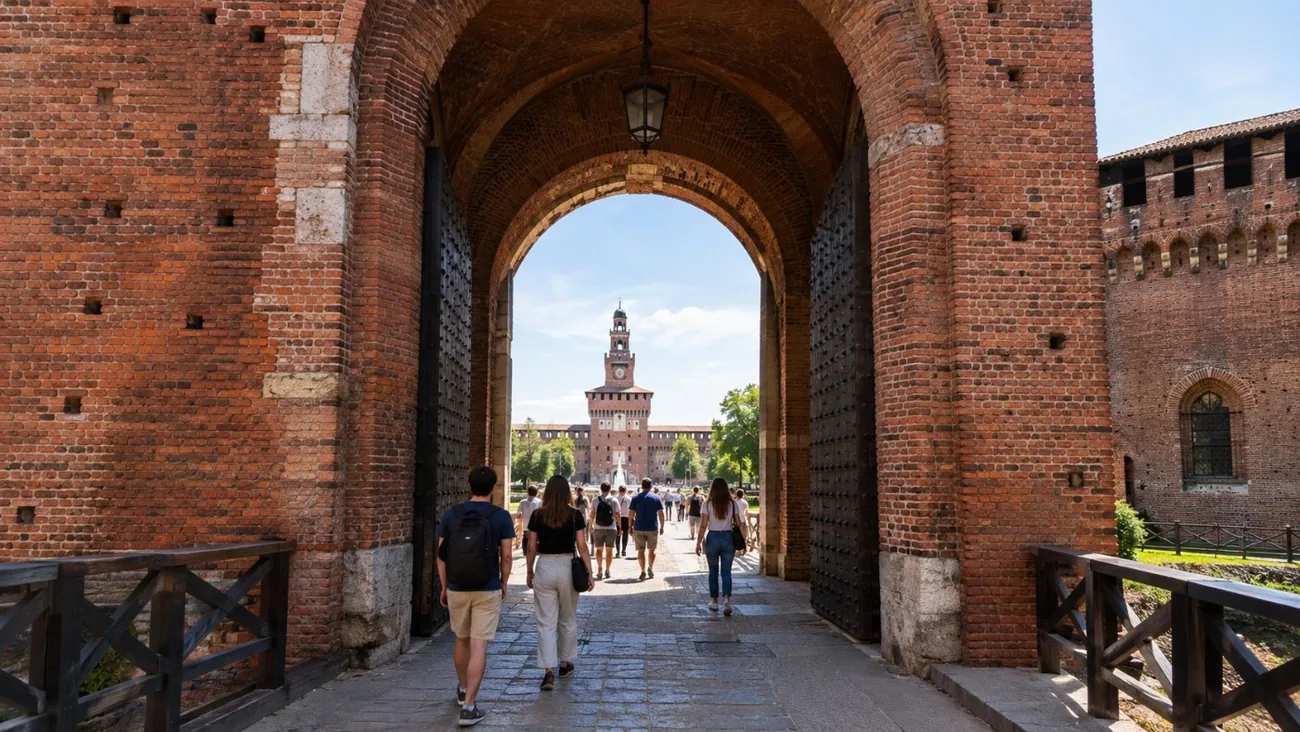
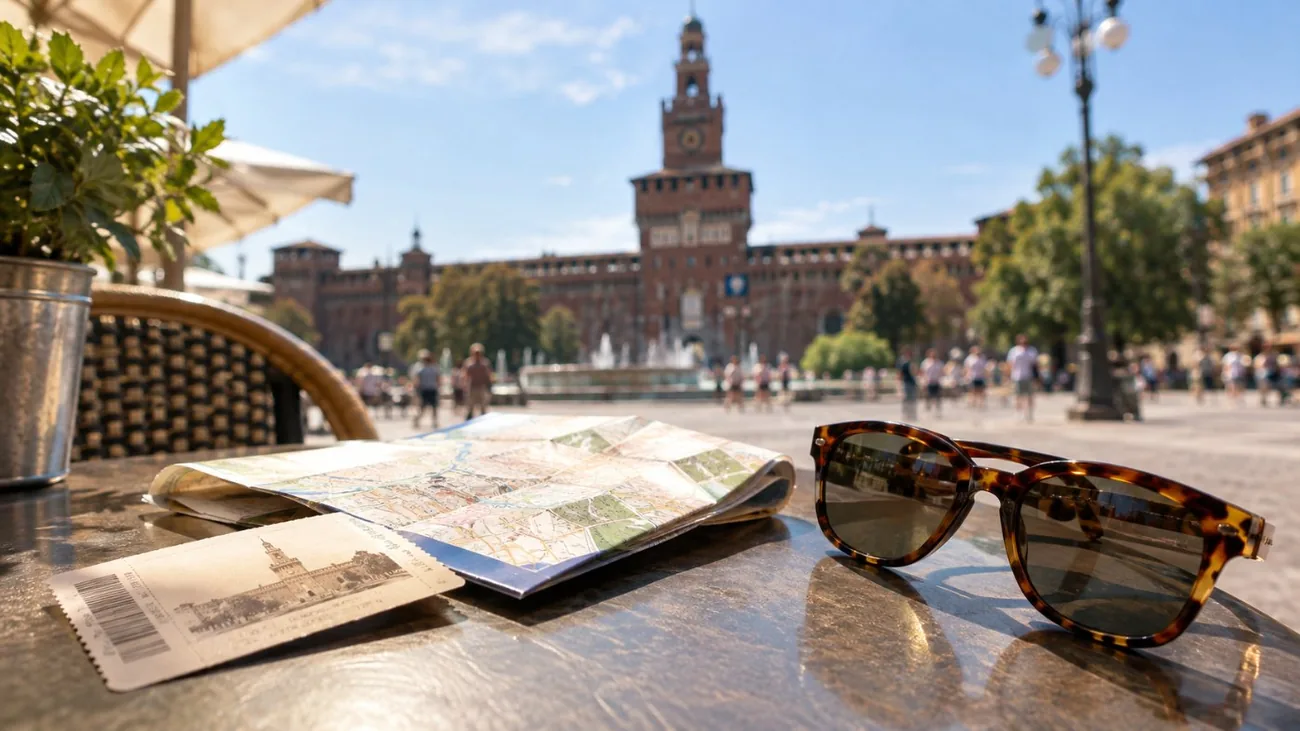
Walk up Via Dante from the Duomo and straight under the Filarete tower: nobody asks for a ticket. The Piazza d'Armi, the
ducal courtyard and the Rocchetta are open every day from 7:00 to 19:30, and they are free. Plenty of people see the castle
this way and leave happy.
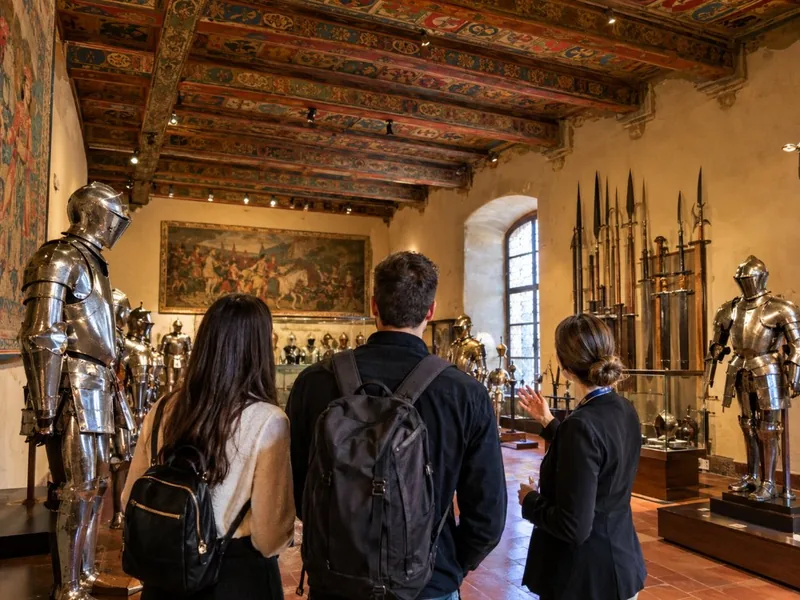
What costs money is the Civic Museums inside, seven collections on one ticket: Michelangelo's Pietà Rondanini, the
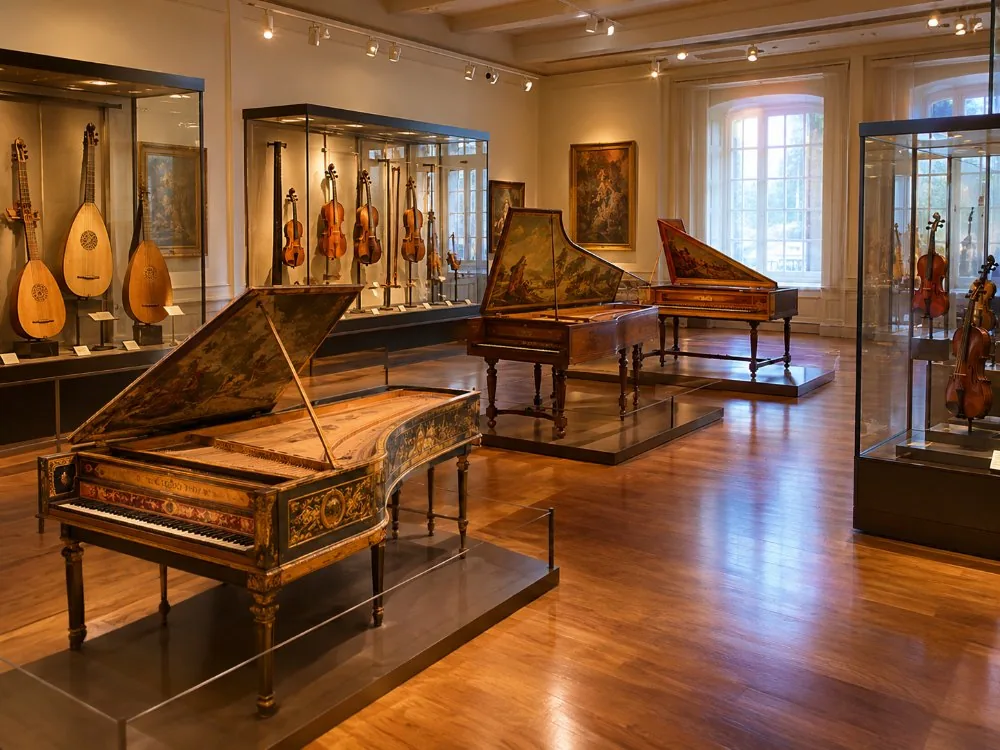
Museum of Ancient Art with its armoury, the picture gallery with Mantegna and Bellini, furniture, decorative arts, musical
instruments and the Egyptian gallery. Since 10 May 2026 that ticket costs €10 at the door, double the old price. The
battlements and the underground passage are separate tickets again. And Leonardo's painted Sala delle Asse? Closed for
restoration, with the city aiming for 2027.
€0
To walk into the courtyards, any day of the week. The museums are
free too on the first Sunday of every month, and for under-18s every day.
Free courtyardsMuseum ticketBattlementsGuided tour
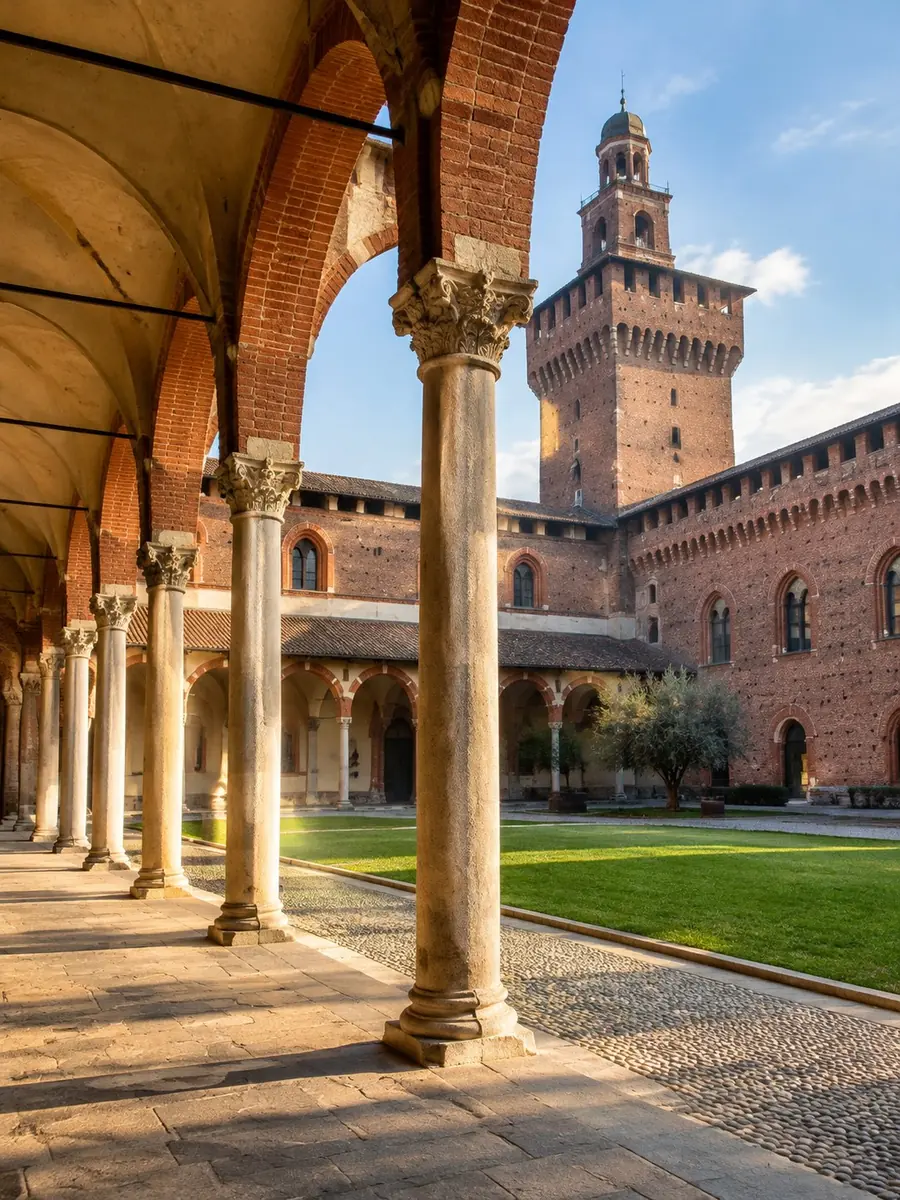
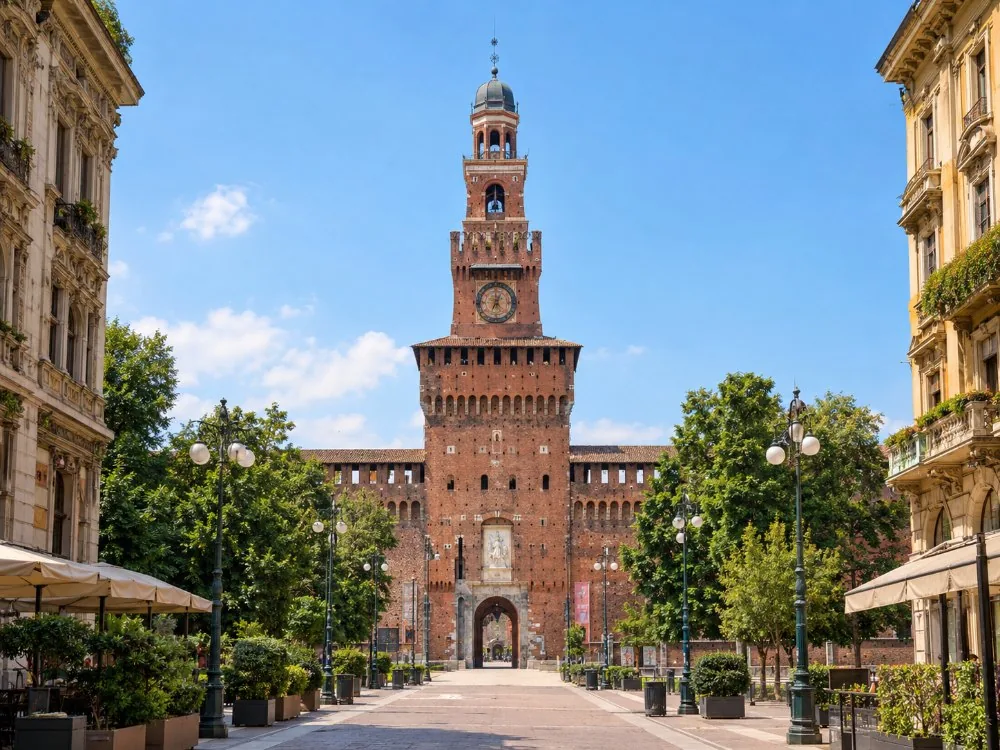
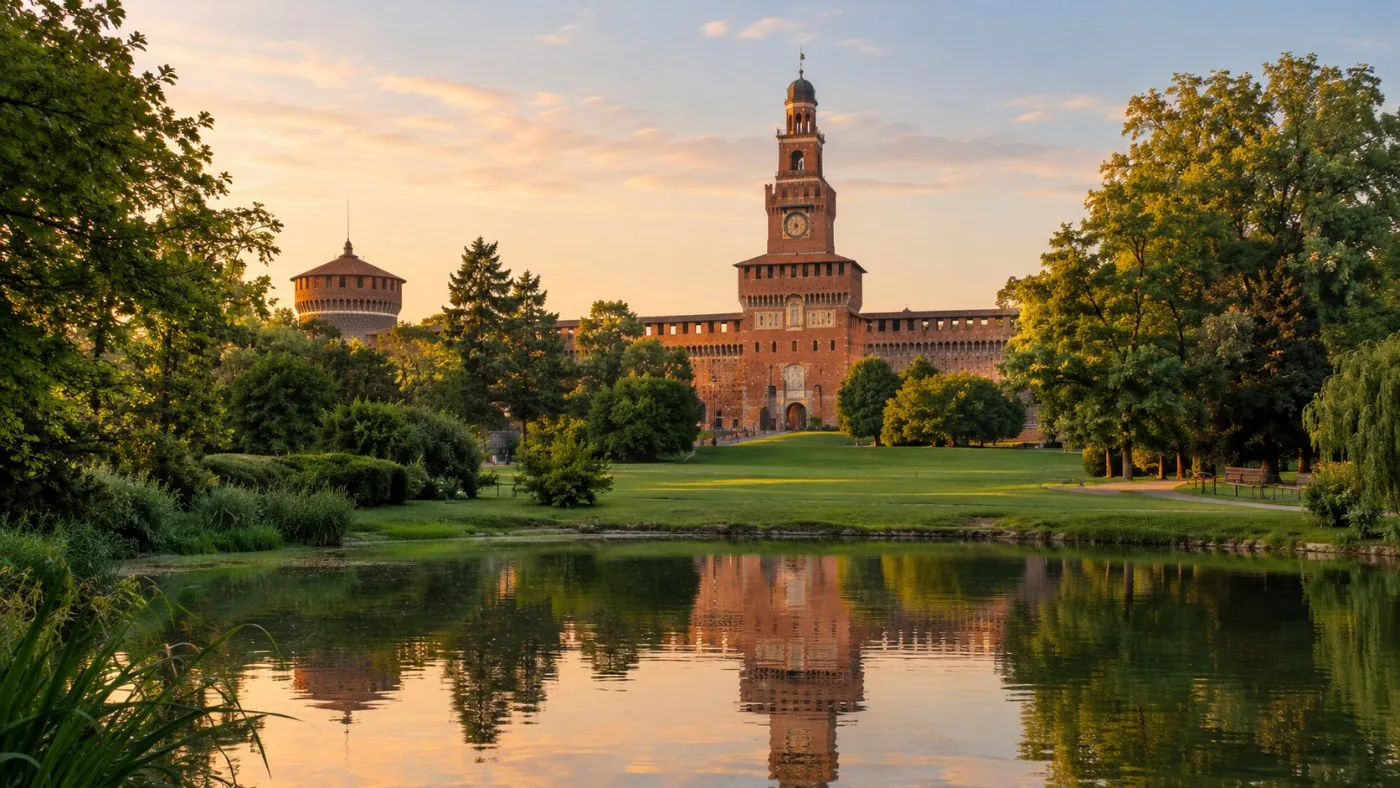
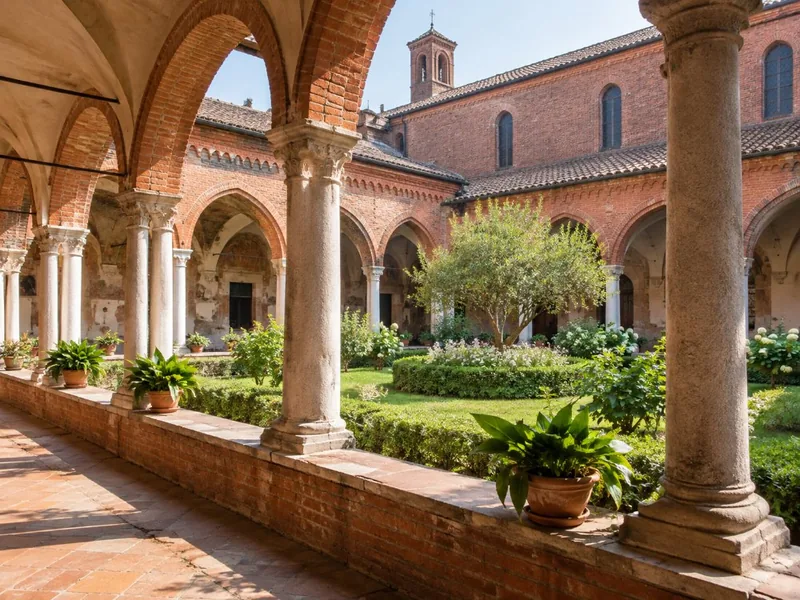
The ducal courtyard, free to walk into from 7:00 every morning.
01
Is it free?
The courtyards, yes. The museums cost €10, free on the first Sunday of the month.
02
Is the Last Supper here?
No. It is at Santa Maria delle Grazie, a 15-minute walk west, with its own ticket.
03
Can I see Leonardo?
Not his painted room: the Sala delle Asse is under restoration. The Pietà is open.
04
When is it closed?
The museums close on Mondays and on 25 December, 1 January and 1 May.
Your visit
How a castle visit runs
Two to three hours covers the courtyards and the museums at a good pace. Add the walls and the park and it is a half day.
01
Through the gate
Under the Filarete tower into the Piazza d'Armi, then on to the ducal courtyard and the Rocchetta. All free.
20 to 30 minutes
02
The Pietà first
Michelangelo's last sculpture stands alone in the old Spanish Hospital. Go early, while the room is quiet.
15 to 20 minutes
03
The museums
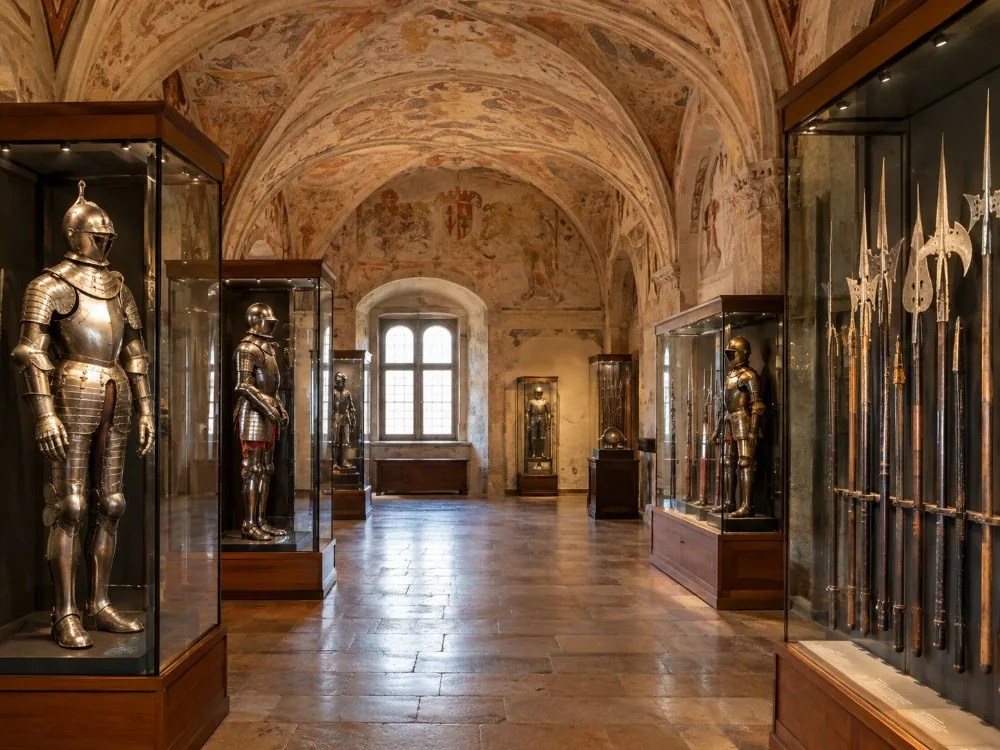
Sculpture and armour, then upstairs to furniture, paintings and the musical instruments. One entry per section.
About 2 hours
04
Walls or park
Walk the battlements on a separate ticket, or go out the back gate into Parco Sempione and up to the Arco della Pace.
Opening hours, ticket prices, free days and how to get there: one tab each.
Courtyards: every day, 7:00 to 19:30, free.
Museums: Tuesday to Sunday, 10:00 to 17:30. The ticket office closes at 16:30, which is also the last entry to each section.
Closed: every Monday, plus 25 December, 1 January and 1 May.
Battlements (Merlate Panoramiche): Tuesday to Sunday, last entry 17:00, groups every 20 minutes.
Museum ticket: €10, valid all day for every castle museum, including the Egyptian gallery.
Reduced €5: EU citizens aged 18 to 25, university students and visitors aged 65 and over.
Free: under 18s, visitors with disabilities and one companion, and teachers. Free visitors still need a zero-price ticket.
Audio guide €5 at the bookshop; the Saturday 11:00 guided tour in English costs €20 with the ticket.
Tickets are sold at the castle or online and are not refundable.
First Sunday of every month: free museum entry for everyone. Expect crowds: over 5,000 people came on 2 August 2026.
Second Tuesday of every month: free for visitors up to 25.
The old "free on Tuesday afternoons" rule ended in 2026. Many blogs still repeat it.
Milano Museo Card (€15, a year) and Tourist Museum Card (€20, three days) also get you in.
Metro M1 to Cairoli Castello, opposite the gate. M2 to Lanza or Cadorna.
From the Duomo: about 1 km straight up Via Dante, 10 to 15 minutes on foot.
To the Last Supper: about 15 minutes west on foot, via Corso Magenta.
Large bags are not allowed in the museums; there is a cloakroom. Pets only in the courtyards.
CourtyardsFreeEvery day from 7:00 to 19:30, no ticket needed.
Museums€10One day, seven collections, one entry per section.
Battlements€10The self-guided Merlate Panoramiche, sold at the Info Point.
Time needed2 to 3 hoursCourtyards plus the museums at a steady pace.
ClosedMondaysThe museums, that is. The courtyards stay open.
From the DuomoAbout 1 kmA straight walk up Via Dante, or one stop on the metro.
Where it is
Finding the gate
Piazza Castello, Milan
Main entrance under the Filarete tower, facing Via Dante and Largo Cairoli
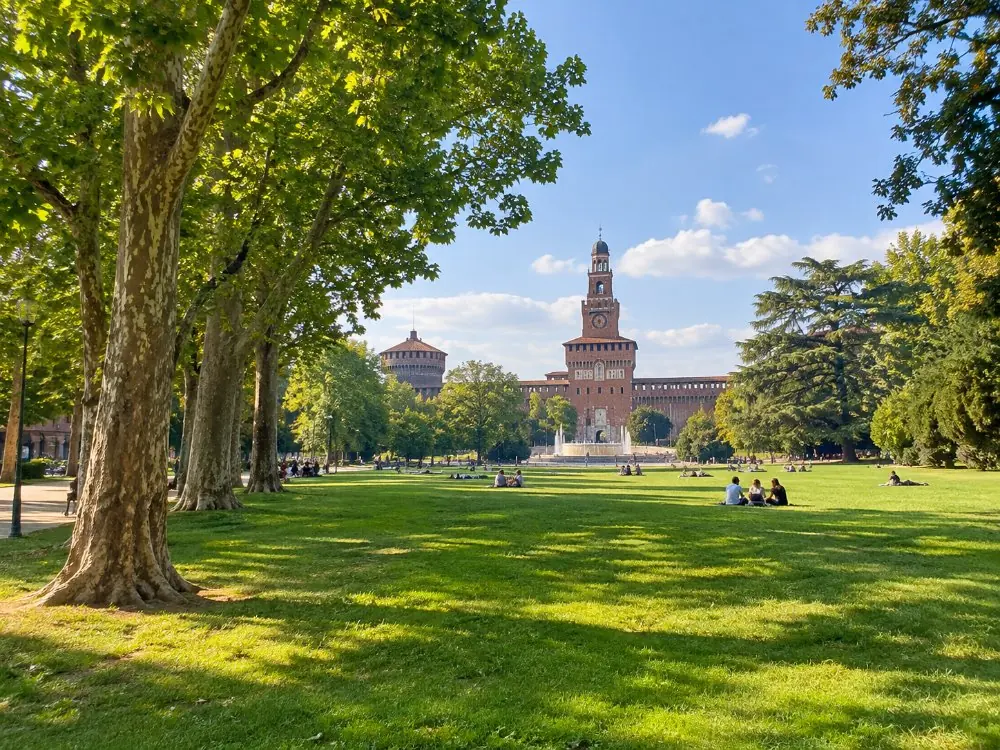
The castle sits at the top of Via Dante with Parco Sempione behind it, so you can walk in from the city side and out
into the park. Guided tours usually meet near the main gate or at the Info Point inside; your voucher gives the exact spot.
The Last Supper tours start at Santa Maria delle Grazie and finish here.
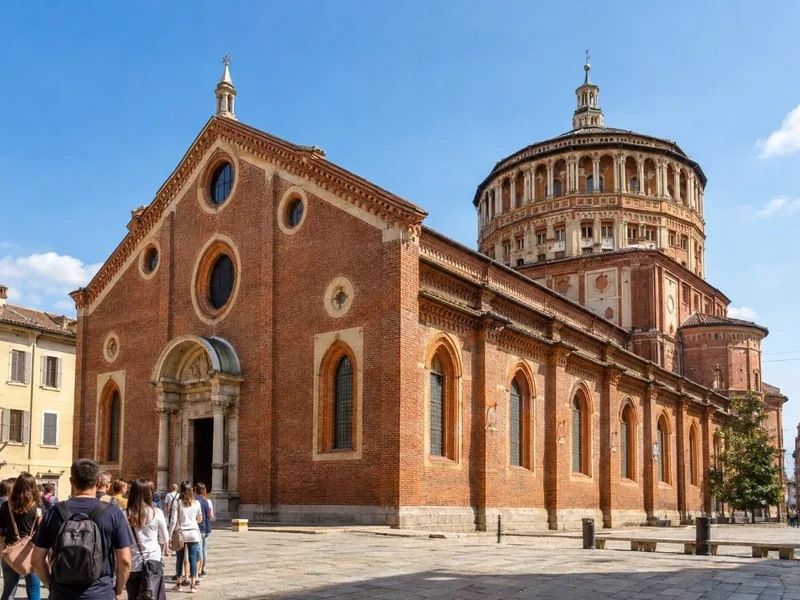
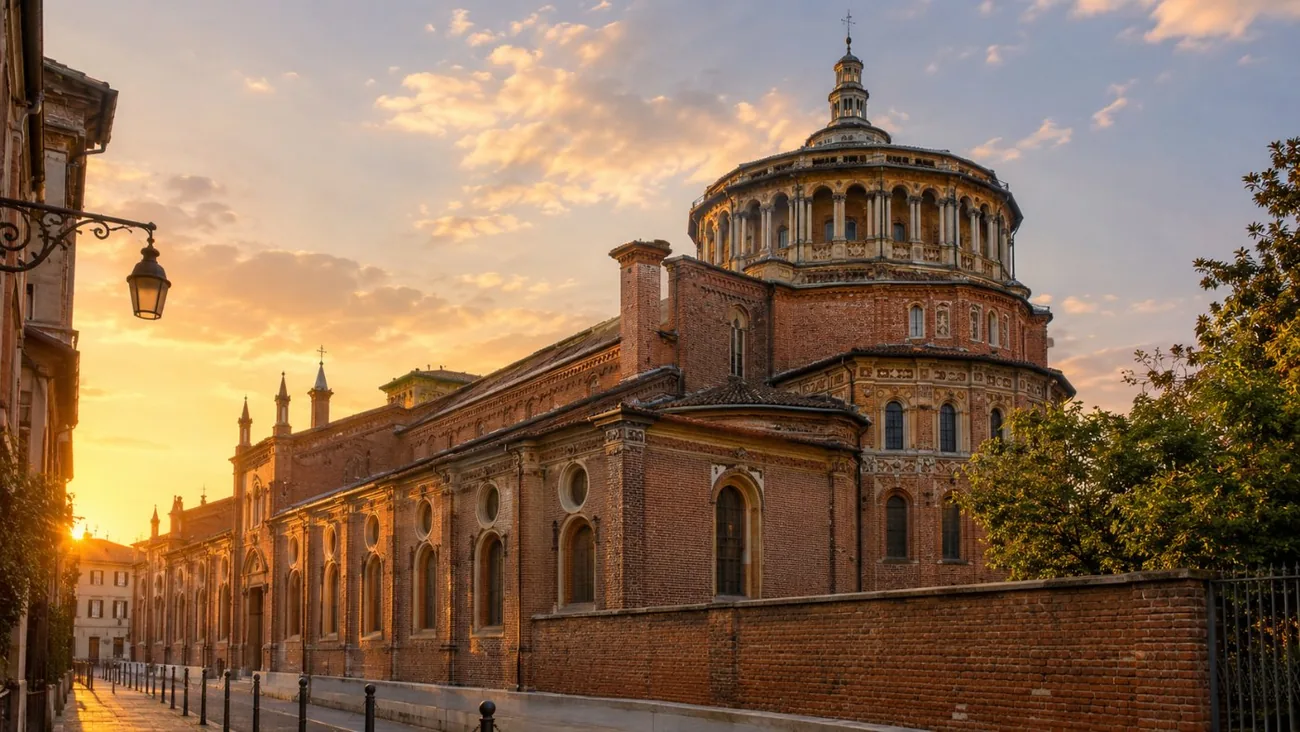
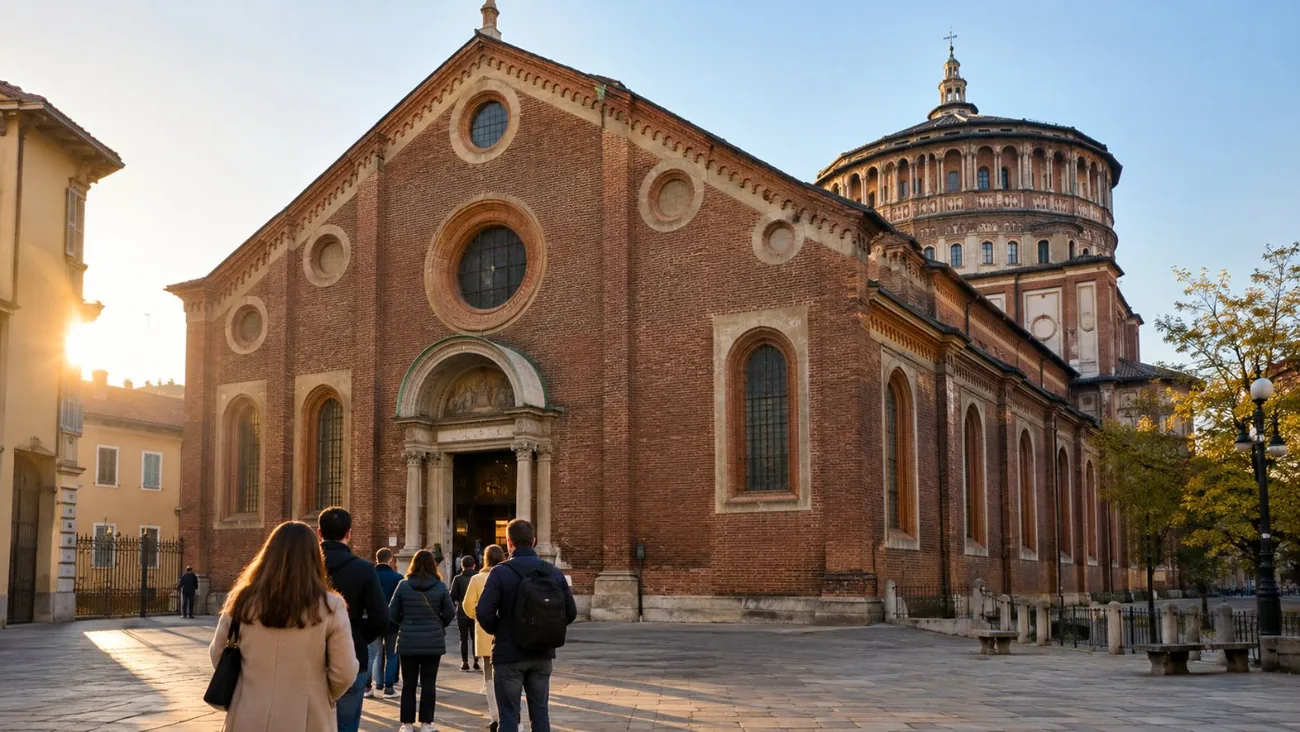
The Last Supper is not in the castle. It is on the refectory wall of Santa Maria delle Grazie, about a 15-minute walk west, and the official slots of 15 minutes for up to 40 people sell out weeks ahead. A guided ticket is the usual way in at short notice.
Most visitors walk through the gate, take a photo of the tower and leave. Fine. But the castle rewards an extra
hour more than almost anything else in Milan, and it helps to know what you are looking at.
Two families, one fortress
The Visconti lords put the first castle here in the 1360s, on the city walls at the Porta Giovia gate. When the last
Visconti duke died in 1447, the Milanese declared a republic and tore the hated fortress down. Three years later the soldier
who had married the duke's only daughter, Francesco Sforza, rode into Milan as its new duke and started rebuilding the castle
at once. The Sforza court made it one of the grandest in Italy. Under Ludovico il Moro, in the 1490s, Bramante and Leonardo
both worked for the court here.
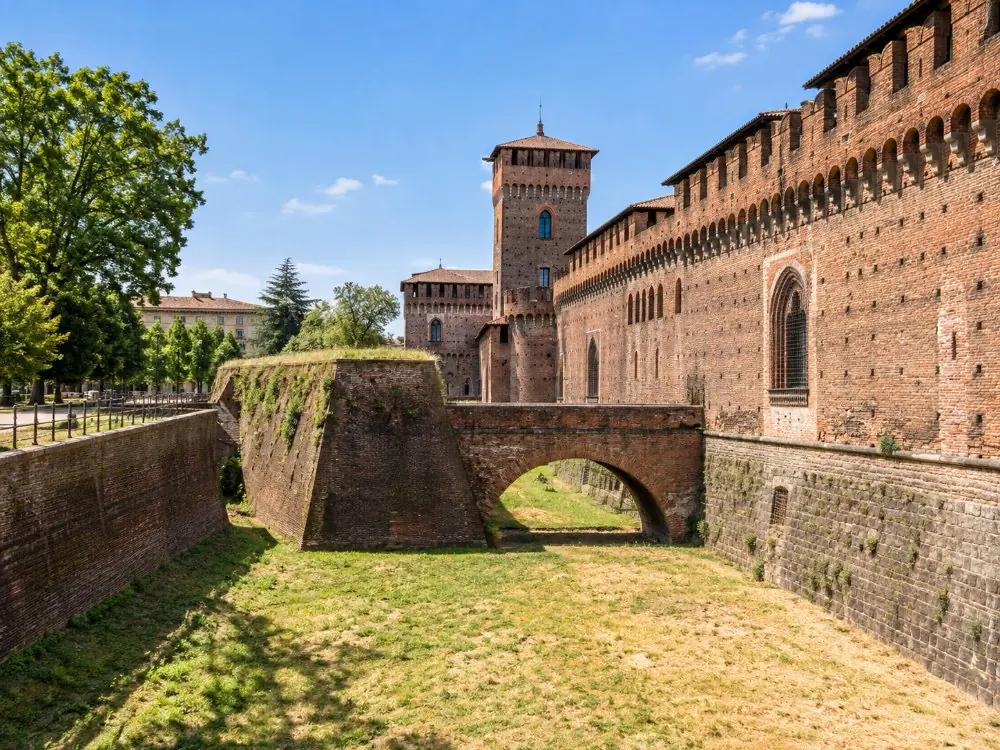
Then came three centuries as a barracks. Spanish, Austrian and French garrisons ringed it with star-shaped bastions,
painted over the frescoes and used the rooms as stores. Napoleon ordered it demolished in 1800. It survived, barely, and in
the 1890s the city chose to restore it rather than knock it down. The architect Luca Beltrami spent the next fifteen years on
that job.
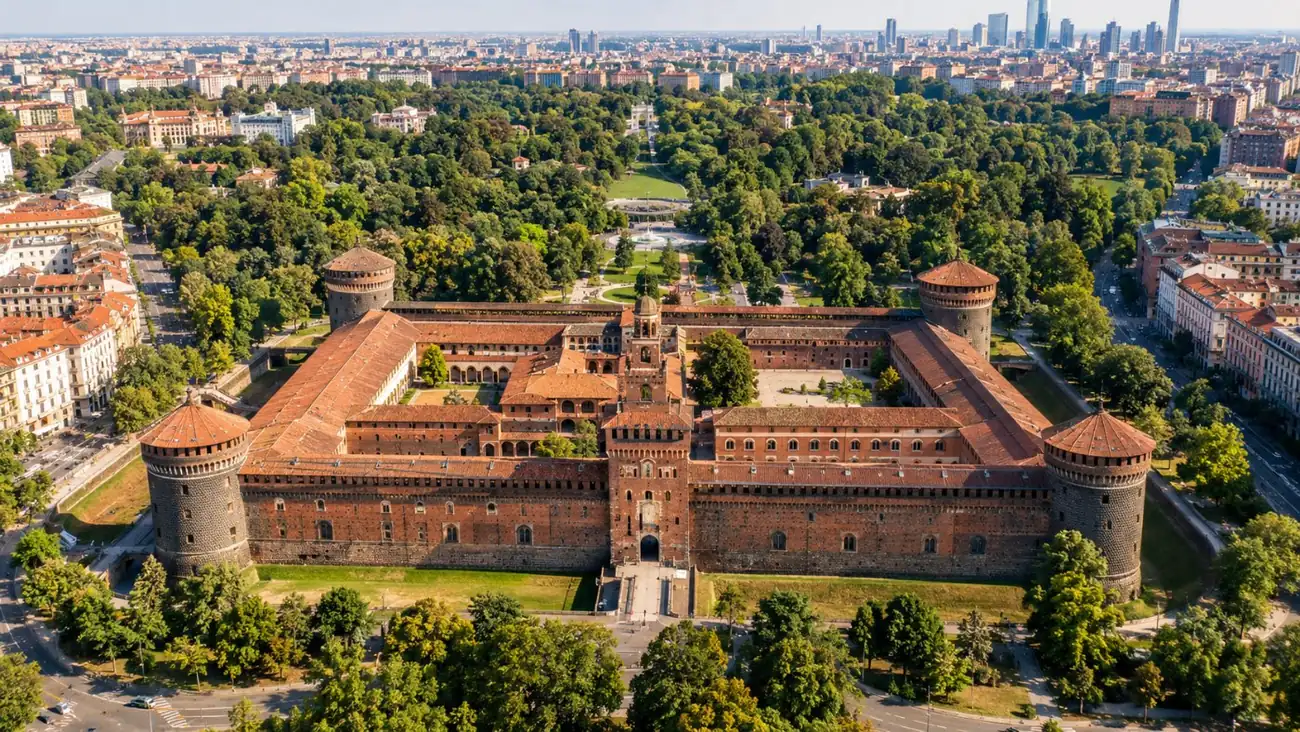
The square plan, the round corner towers and Parco Sempione behind: the castle sits on the edge of the old city.
The tower is younger than it looks
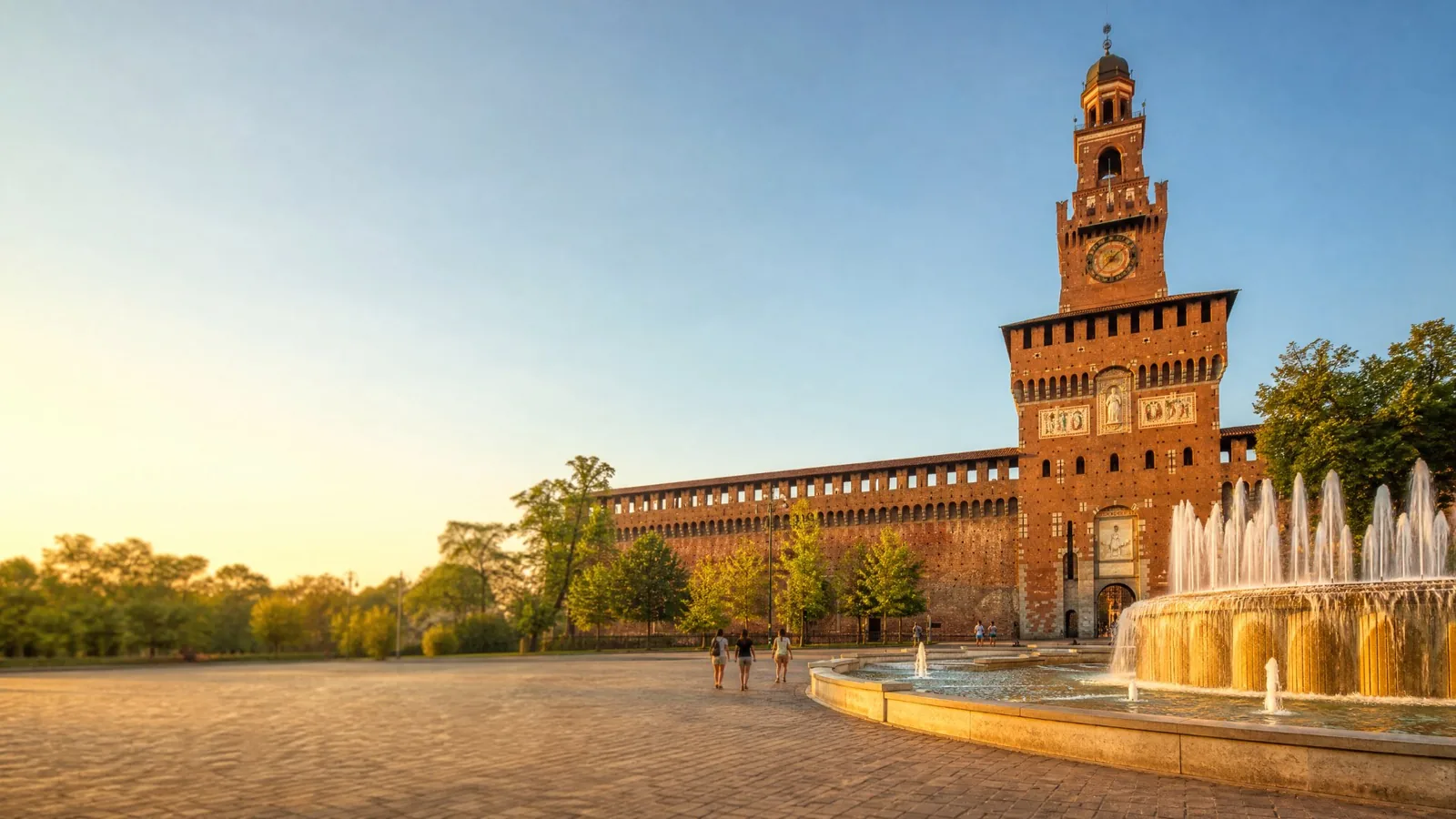
The tall gate tower is the one thing everybody photographs. It is named after Filarete, who designed it in 1452, but the
original exploded in June 1521 when gunpowder stored inside caught fire. What you see is Beltrami's reconstruction from old
drawings, inaugurated in 1905 and dedicated to King Umberto I, killed at Monza in 1900. Look up for the clock with its Sforza
sun, the statue of Saint Ambrose and the painted coats of arms of the six Sforza dukes.
What is worth your ticket
Start with the Pietà Rondanini. Michelangelo worked on it in the last years of his life and was still changing it
days before he died in February 1564. It is rough, unfinished and strange, two thin figures almost melting into one, and the
old Spanish Hospital it stands in lets you walk all the way round. Then the Museum of Ancient Art: the gilded marble tomb of
Bernabò Visconti on horseback, Lombard sculpture and the armoury. Upstairs, the picture gallery holds Mantegna's 1497
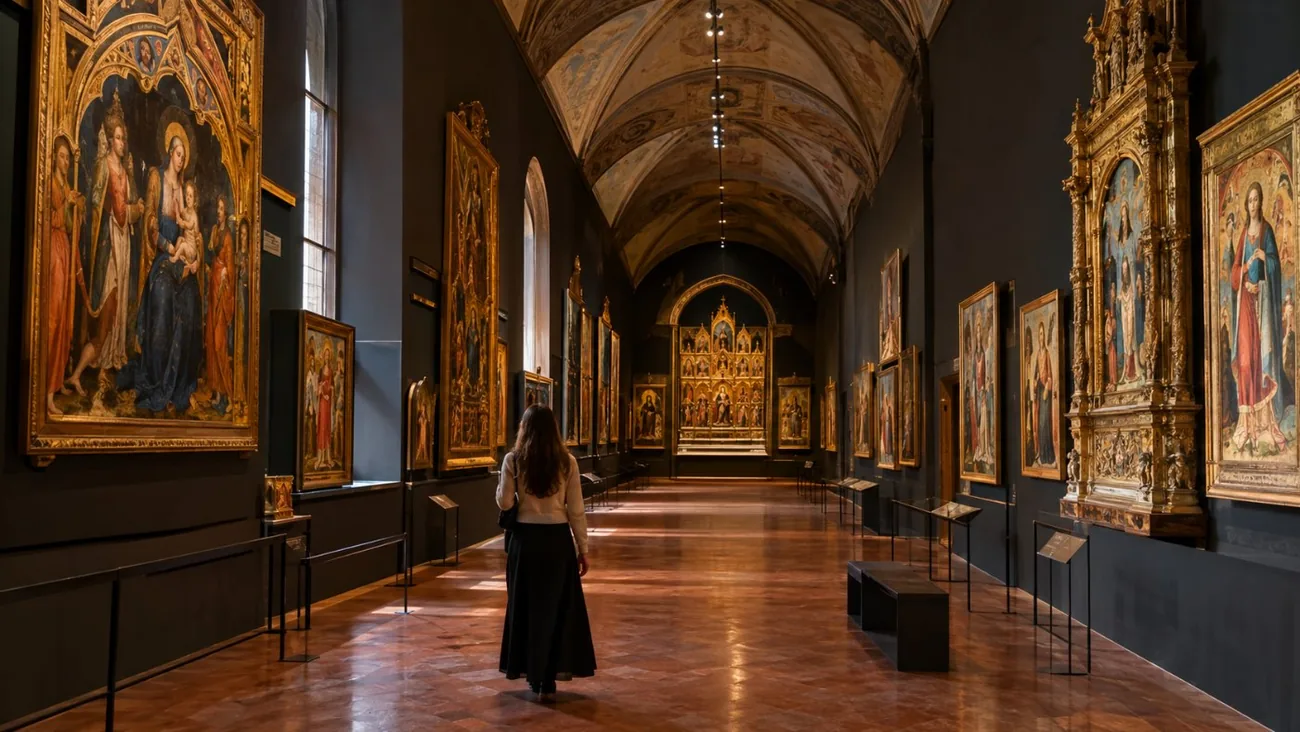
altarpiece, Bellini, Correggio and Canaletto, and the musical instruments room is a quiet favourite.
The honest small print: many tours with "Sforza Castle" in the title are Last Supper tours that finish
in the free courtyards, with no museum entry. If the Pietà is what you came for, check that the listing includes castle and
museum entrance fees. Each of our tour pages says what is inside and what is not.
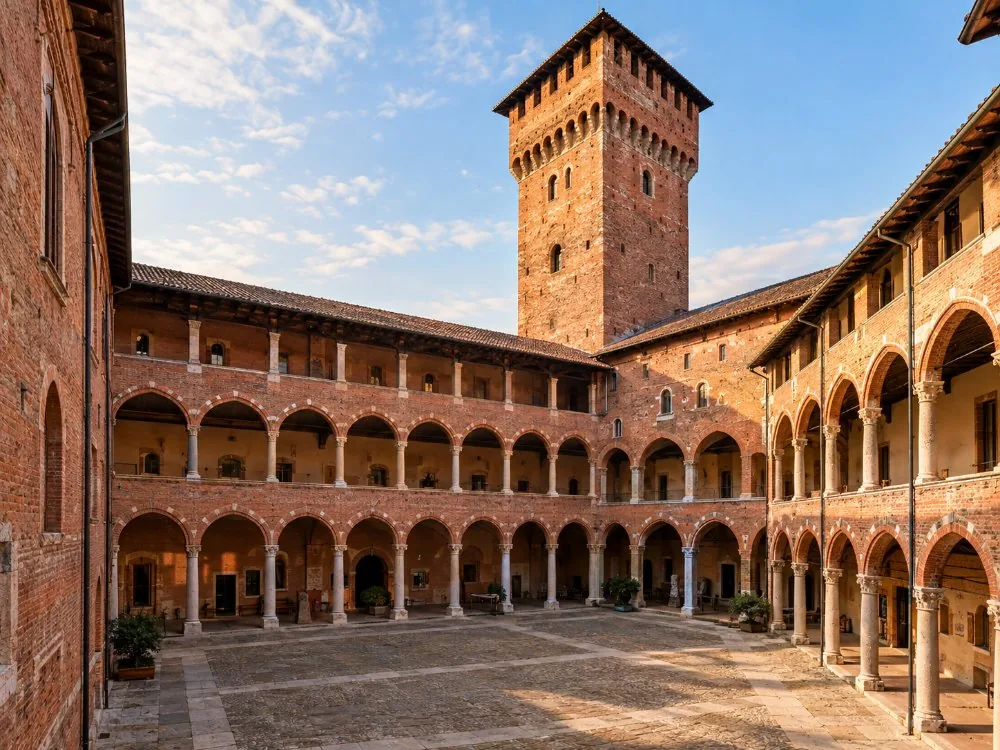
The Pinacoteca runs from Lombard painters such as Foppa and Luini to Mantegna and Canaletto.
Leonardo: the room you cannot see yet
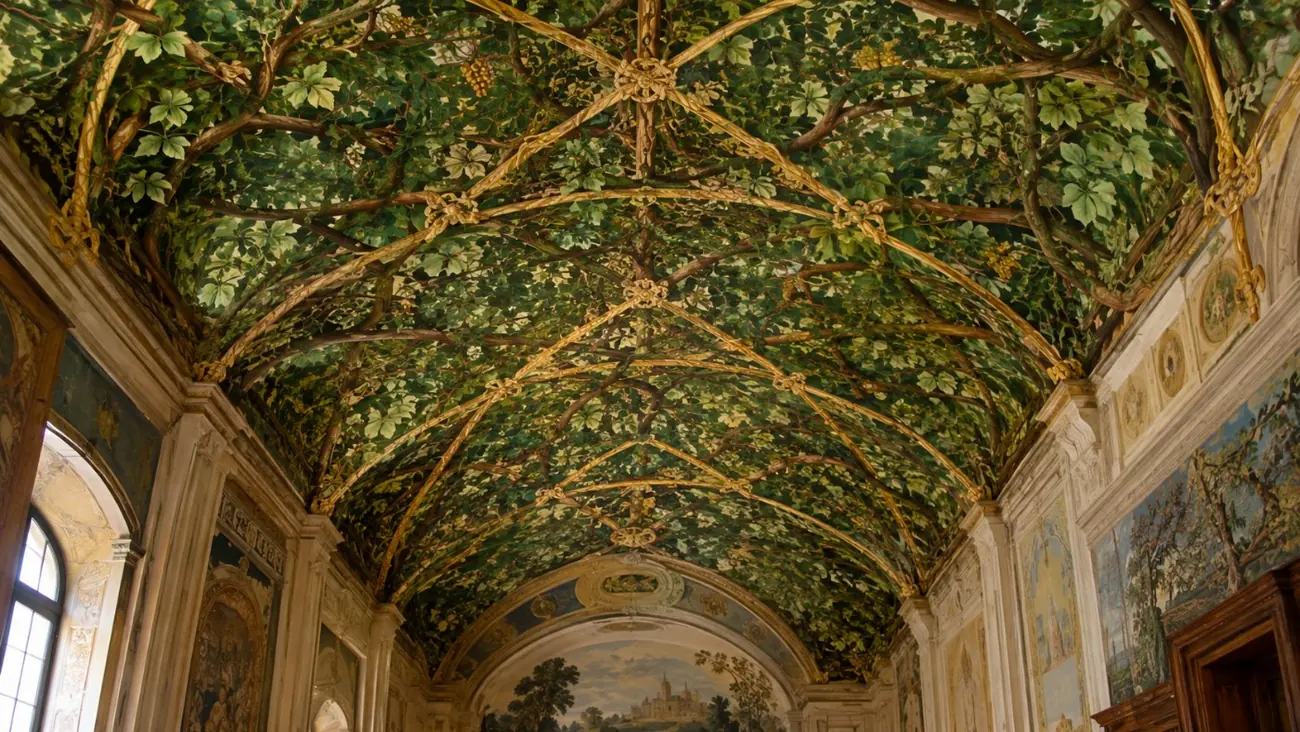
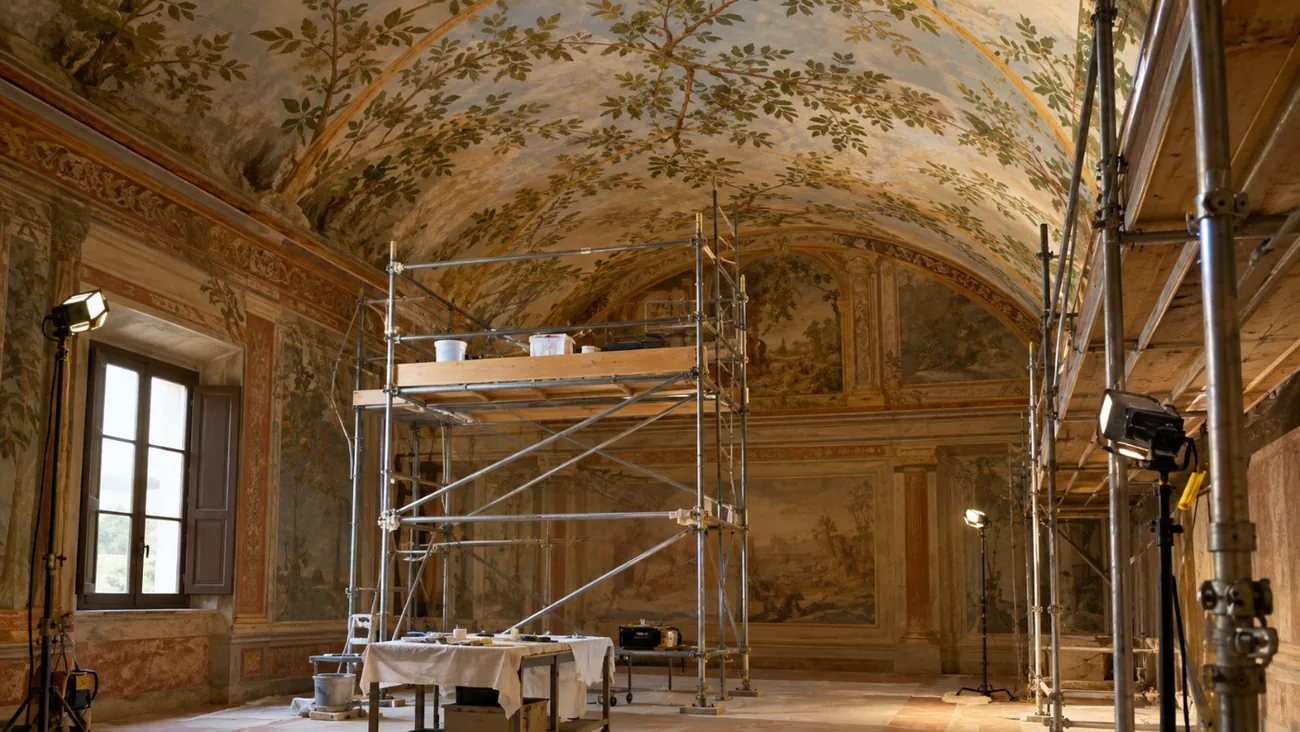
Leonardo painted the ceiling of the Sala delle Asse around 1498 as a pergola of mulberry trees knotted with gold rope. It
has been under restoration since 2013. During the 2026 Winter Olympics small groups could climb the scaffolding for a few
weeks; it is closed again, and the city has said it hopes to reopen it in May 2027. Treat that as a target. The ticket still
covers everything else, and tours that promise "Leonardo" at the castle are mostly talking about his years at the Sforza
court.
The walls and the tunnels
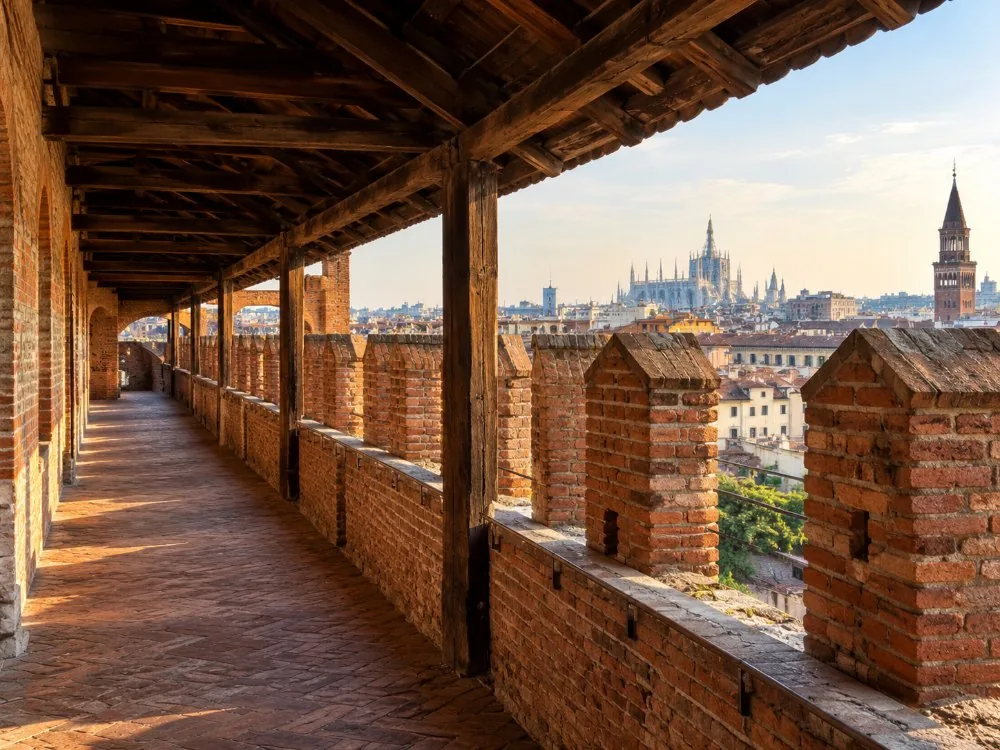
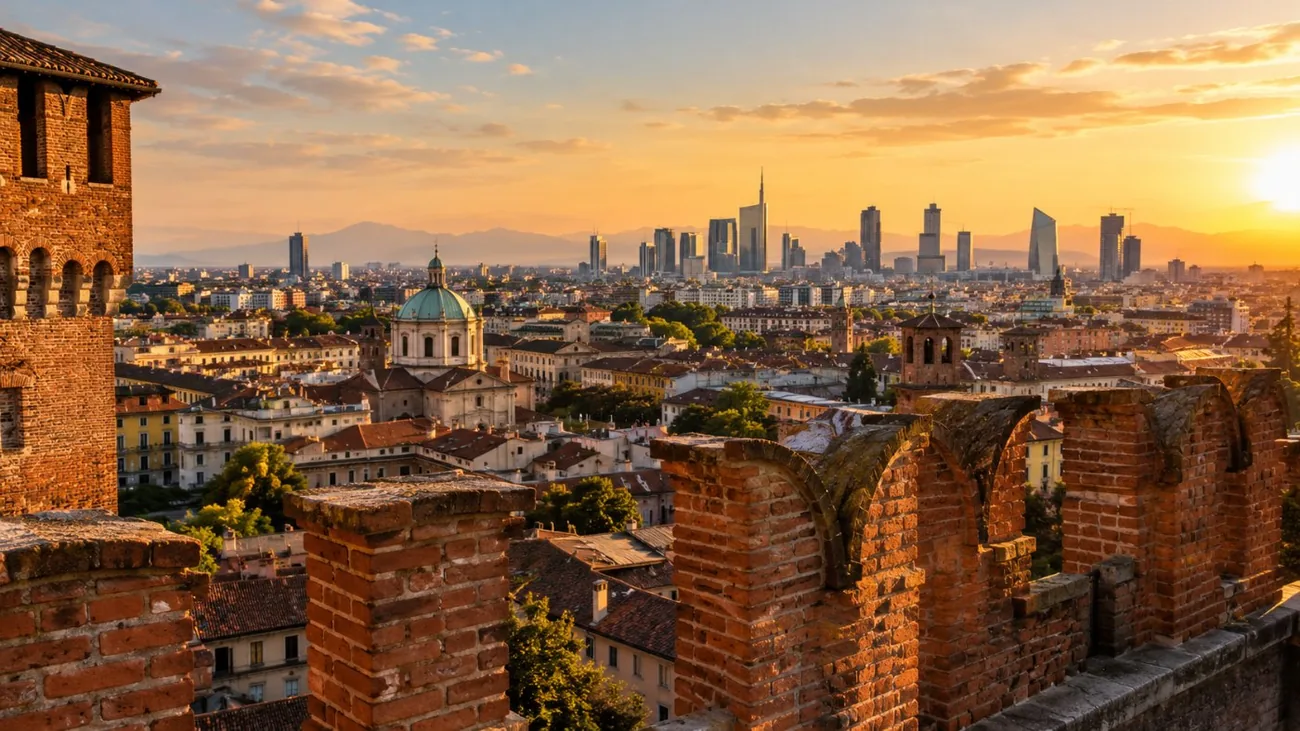
Two parts of the castle are only open with their own ticket. The battlements walkway, the Merlate, has a self-guided
option every 20 minutes and guided walks at weekends, with views over the city rooftops. Below ground, the covered road of
the Ghirlanda, the old outer defences, is guided only. Neither is in the museum ticket, and both involve plenty of steps.
From the walls the view runs over the old city to the towers of Porta Nuova.
Straight answers to what people ask most about the Castello Sforzesco.
Is the Castello Sforzesco free?
The courtyards are: anyone can walk in every day from 7:00 to 19:30. The museums inside cost €10 (€5 reduced) since 10 May 2026, and are free for everyone on the first Sunday of the month and for under-18s every day. The full rules are in our ticket guide.
Can you go inside Sforza Castle?
Yes. The gate under the Filarete tower is open to all, and it leads into the Piazza d'Armi and the ducal courtyards. The rooms beyond, from the Pietà Rondanini to the armour and the musical instruments, are the Civic Museums and need a ticket. See what is inside.
Is the Last Supper in Sforza Castle?
No. Leonardo's Last Supper is on the refectory wall of Santa Maria delle Grazie, about a 15-minute walk west of the castle. It needs its own timed ticket. What the castle has of Leonardo, the painted Sala delle Asse, is closed for restoration. Read how to see both.
What is inside Sforza Castle?
Michelangelo's last sculpture, the Pietà Rondanini; the Museum of Ancient Art with arms and armour; a picture gallery with Mantegna and Bellini; furniture, decorative arts and musical instruments; and an Egyptian gallery that reopened in March 2026. One ticket covers them all for the day.
Why is Sforza Castle famous?
It was the seat of Milan's dukes. Francesco Sforza rebuilt it from 1450 on the ruins of a Visconti fortress, and under Ludovico il Moro Leonardo and Bramante worked here. Later it was a Spanish and Austrian citadel, Napoleon wanted it pulled down, and the architect Luca Beltrami restored it around 1900. The history guide has the dates.
When was Castello Sforzesco built?
The first castle went up in the 1360s under Galeazzo II Visconti and was destroyed in 1447. The castle you see is mostly Francesco Sforza's rebuild, begun in 1450. The gate tower is a reconstruction finished in 1905, after the original blew up in 1521 when gunpowder stored inside it exploded.
Is Sforza Castle worth visiting?
Yes, even if you only have half an hour: the courtyards are free and ten to fifteen minutes on foot from the Duomo. Give the museums about two hours, and go for the Pietà Rondanini if nothing else. Add the battlements walk if the weather is clear.
What are the opening hours?
Courtyards every day 7:00 to 19:30. Museums Tuesday to Sunday 10:00 to 17:30, last entry 16:30, closed on Mondays, 25 December, 1 January and 1 May.
Can you walk on the castle walls?
Yes, in two ways. The self-guided Merlate Panoramiche ticket (€10) lets small groups onto a stretch of the walkways every 20 minutes, Tuesday to Sunday. Guided walks of the battlements and the underground passage run separately. See the battlements guide.
Do I need to book Sforza Castle tickets in advance?
Not for individual visitors: the ticket office sells on the day and queues are usually short. Book ahead on free first Sundays, for groups of ten or more (compulsory), or if you want a guide. Tickets are not refundable.
How do I get to Sforza Castle?
Take metro M1 to Cairoli Castello, right in front of the gate, or M2 to Lanza. From the Duomo it is about 1 km straight up Via Dante, a 10 to 15 minute walk.
Ready to book
Through the gate, then inside.
The courtyards are free. For the museums, the Pietà and a good story, pick a ticket or a guide.

 Lowest price
★ 4.03 hoursFree cancellation