The Pietà Rondanini at Castello Sforzesco
What you see
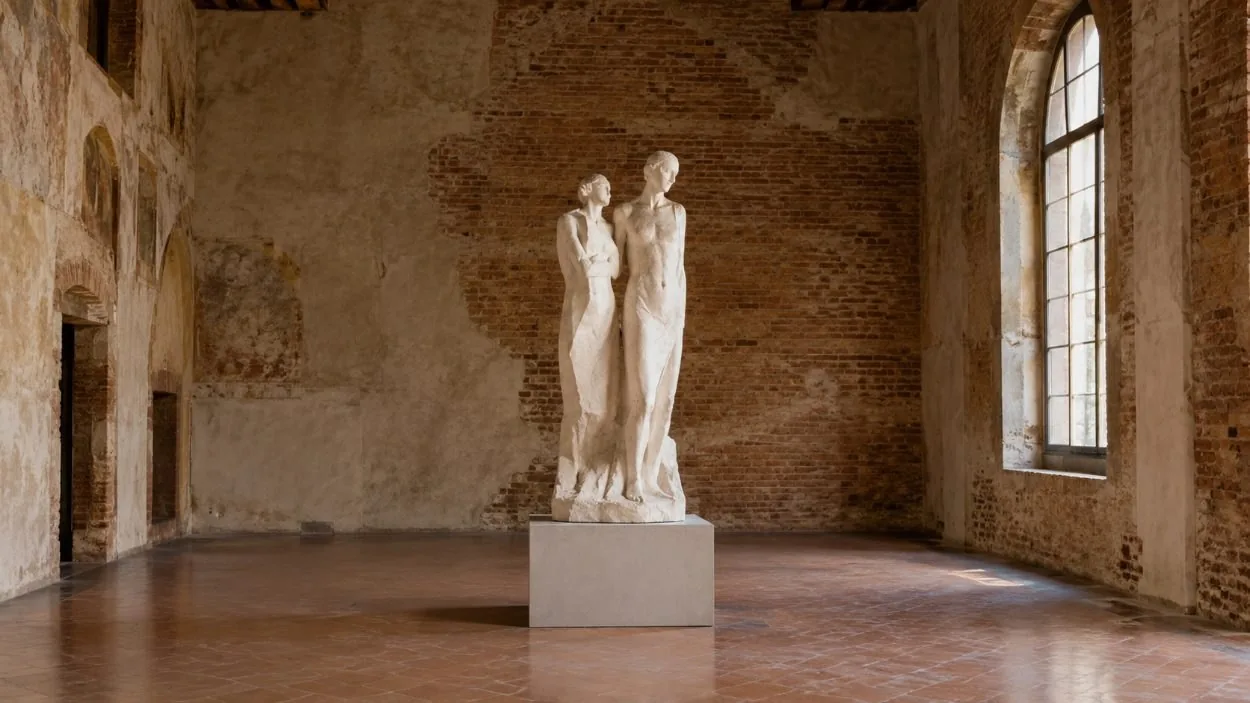
A block of marble with two standing figures, the mother supporting her son from behind—or perhaps the reverse, because at some point it’s no longer clear who is holding whom. The figures are elongated, the surface half-finished, an arm from an earlier version left detached beside the group. This is the unfinished in its most extreme form, and it’s not an artistic choice: Michelangelo was still carving it when he died. I’ve guided school groups in front of this stone for three years, and the most common reaction is silence—which, for a school group, says a lot.
Where it is and how to enter
Until 2015, the Pietà was in the rooms of the Museo d’Arte Antica, in the post-war layout by BBPR studio. Today it has its own museum in the ex Ospedale Spagnolo, on the side of Piazza d’Armi opposite the Corte Ducale. Entry is with the same ticket as all the other museums in the castle: Tuesday–Sunday, 10:00–17:30, last entry at 17:00, closed Monday. Tickets are sold at the castle ticket office and do not sell out; free for under 18s, for everyone on the first Sunday of the month, and for under 25s on the second Tuesday. Full opening hours.
The Pietà should be the first place you visit, not the last. The ducal halls are long, and anyone who does them first arrives at Michelangelo tired and with the clock ticking.
Why is it here and not in Rome
The sculpture takes its name from the Palazzo Rondanini in Rome, where it remained for a long time. The City of Milan acquired it in the 20th century and brought it to the Castello Sforzesco, where the Civic Museums have been based since the late 19th century. It’s not the only important work within the walls, but it’s the only one worth paying for even if you have little time. The Sala delle Asse by Leonardo, the other name everyone looks for, is closed for restoration.
What a guide adds
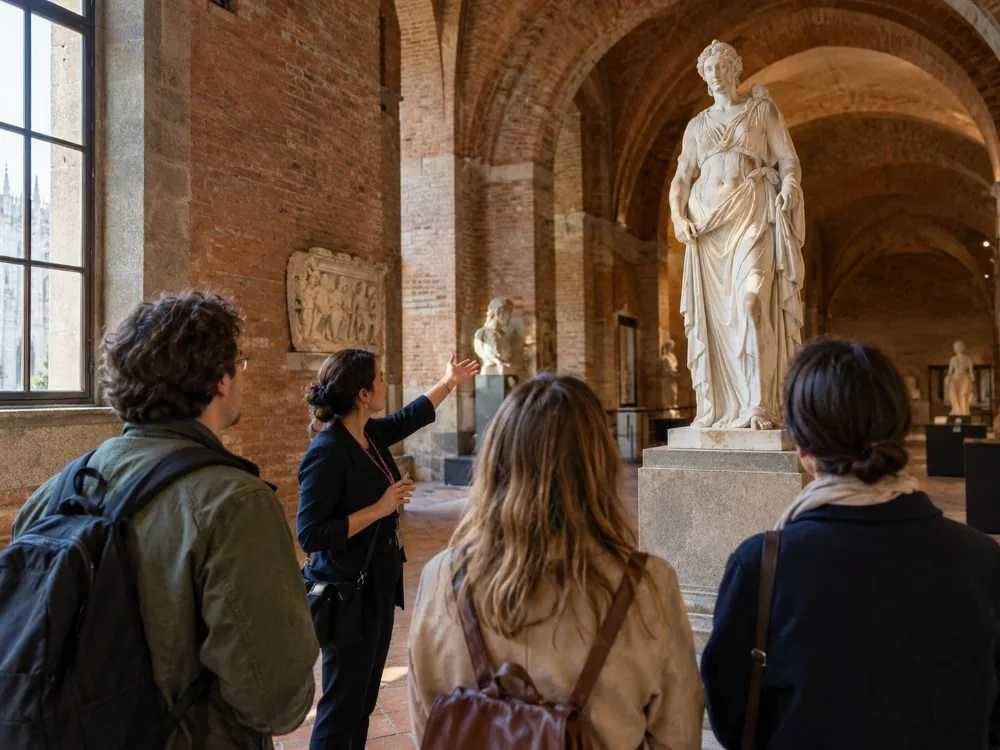
A caption in front of the Pietà Rondanini isn’t enough, and the audio guide in the app helps only to a point. What makes the difference is a person who shows you the detached arm, explains what was sculpted first and what later, and keeps you there for just the right amount of time. The small-group tour of an hour and a half starts right here: certified guide, headsets for up to eleven people, then the Corte Ducale, the Rocchetta, the history of the Visconti and Sforza families, the Biscione and the Torre del Filarete. Castle and museum admission included, in Italian, English, German, French and Spanish, meeting point in Piazza Castello, also bookable as a private tour. The private two-hour tour does the route in reverse and ends in front of the Pietà.
What works
- The single ticket always includes it, with no extra charge
- A small, quiet museum—easy to enjoy even with a crowd
- Free for under 18s and on the first Sunday of the month
Good to know
- The first Sunday of the month is the busiest day
- Closed on Monday like all museums
- The Last Supper tour with a walk through the courtyards does not enter here
 Small group · 5 languages
Milan: Castello Sforzesco and Michelangelo’s Pietà Rondanini tour
 Private · 6 languages
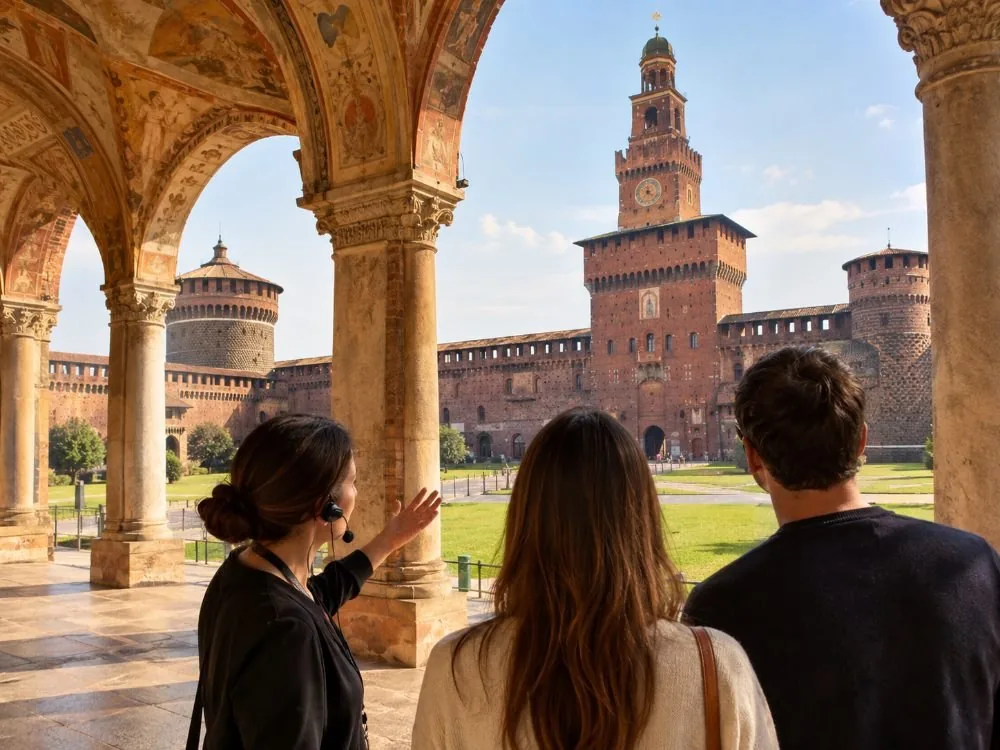
Milan: private guided tour of Castello Sforzesco
The guided tour that starts from the Pietà
Small group, certified guide, one and a half hours, museum ticket included, free cancellation up to 24 hours before.
Frequently asked questions
Is the Pietà Rondanini by Michelangelo or Leonardo?
By Michelangelo. Leonardo left the Sala delle Asse at the castle, which is closed for restoration. The room, and why it’s not accessible.
Do you need a separate ticket for the Pietà?
No, it’s included in the combined ticket for the castle museums. What the ticket covers.
Can you see the Pietà for free?
Yes, on the first Sunday of the month for everyone, always free for under 18s, and on the second Tuesday of the month for under 25s. Free entry days.
How long does it take to see it?
The museum is small: 20 minutes is enough, half an hour with a guide. Visit times.