History of Castello Sforzesco, from 1360 to today
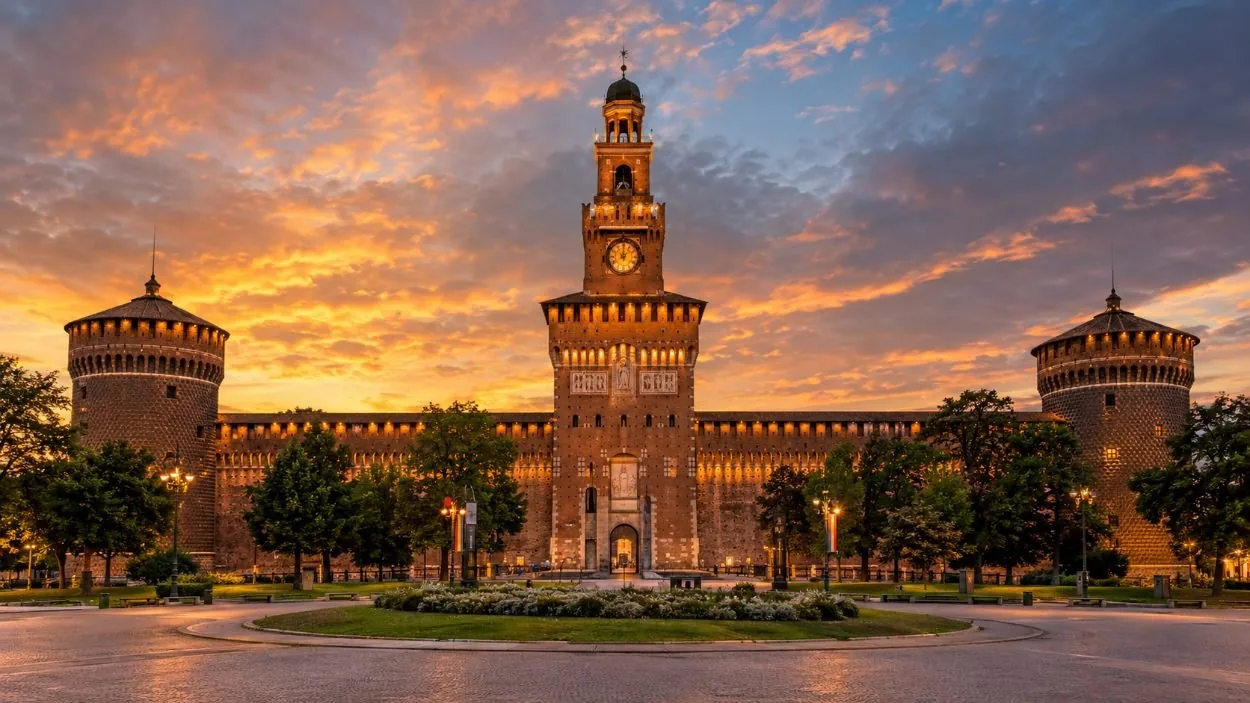
1360–1450: the Castello di Porta Giovia
Galeazzo II Visconti built the first castle, called Porta Giovia, between 1360 and 1370, against the city walls. It was the ducal residence of the Visconti. After the death of the last duke, between 1447 and 1450, the Ambrosian Republic partially demolished it because it was the symbol of the lordship the city wanted to end. How old it is, then, depends on what you count.
1450–1535: the Sforza era
Francesco Sforza, the first Sforza Duke of Milan, rebuilt it from 1450 as a court residence. He commissioned the two round towers facing the city, made of diamond-pointed rusticated serizzo, which Bartolomeo Gadio built in 1452; they later served as prisons and now contain water cisterns. In the same year, 1452, Antonio Averlino, known as Filarete, along with Jacopo da Cortona, began the central tower. Galeazzo Maria Sforza, with architect Benedetto Ferrini, and later Ludovico il Moro, from 1494, turned the Corte Ducale into one of the richest courts in Europe: Leonardo worked there for nearly twenty years and painted the Sala delle Asse in 1498; Bramante is credited with the Ponticella bridge over the moat and, with Bramantino, the Argo in the Sala del Tesoro; Bonifacio Bembo frescoed the Cappella Ducale. The Torre di Bona di Savoia dates to 1477. Who lived there, by name.
1521: the tower blows up
In 1521, the gunpowder stored in the Torre del Filarete exploded, and the tower collapsed. For nearly four centuries, the castle remained without its monumental gateway. Today’s tower dates to 1905.
1535–1859: citadel and barracks
Under Charles V, from 1535–36, Milan passed to Spain and the castle became a military citadel: Vincenzo Seregni’s star-shaped bastions, from the 1550s, extended to about 3 kilometres of outer works. In the 18th century, under the Austrians, it was a barracks. In 1800, Napoleon ordered the demolition of the outer works: the Ghirlanda and the Spanish bastions fell in 1801, and the semicircle of Foro Bonaparte in front of the castle is Luigi Canonica’s design, replacing a more grandiose plan that was rejected. From 1815, once again Austrian, the castle bombarded the city during the Five Days of 1848.
1861–1905: from demolition to museum
After Unification, the castle was a barracks and there was debate about tearing it down. Luca Beltrami won the argument: the Ghirlanda was demolished from August 1892, restoration took place from 1893 to 1905, the Torre del Filarete was rebuilt and inaugurated in 1905, dedicated to King Umberto I, assassinated in 1900. In 1893, beneath the plaster, he rediscovered the Sala delle Asse. The Civic Museums moved into the castle from the late 19th century. The restoration, in detail.
1943 to today
In 1943, bombs hit the castle; after the war, the BBPR studio redesigned the museums. The fountain in Piazza Castello, dating from 1936, was removed in the 1960s and rebuilt between 1999 and 2000. In 2015, the Pietà Rondanini got its own museum in the former Ospedale Spagnolo. Since 2012, the Sala delle Asse has been under restoration. In 2024, a georadar study documented underground passages beneath the castle. The owner is the Comune di Milano.
Hearing it told on the spot
This page is a list of dates; in the courtyards, it’s best understood with a guide pointing out the right brick. The small-group tour recounts the Visconti and Sforza eras between the Corte Ducale and the Rocchetta; the private tour focuses on the fortress, the barracks and Beltrami’s restoration.
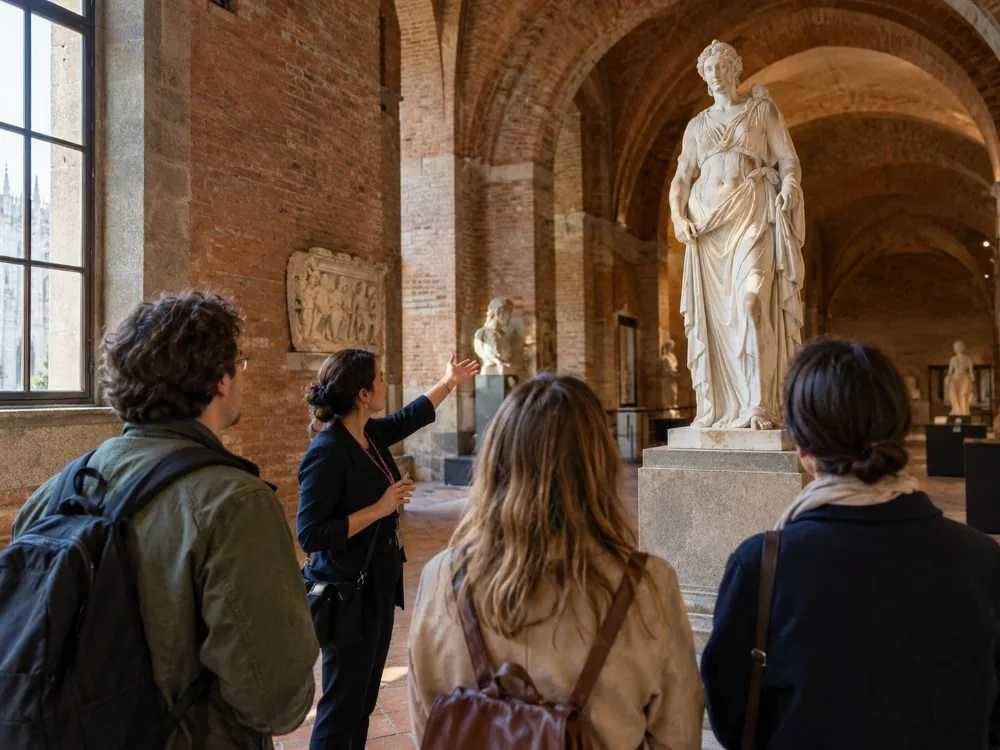 Small group · 5 languages
Milan: Castello Sforzesco and Michelangelo’s Pietà Rondanini tour
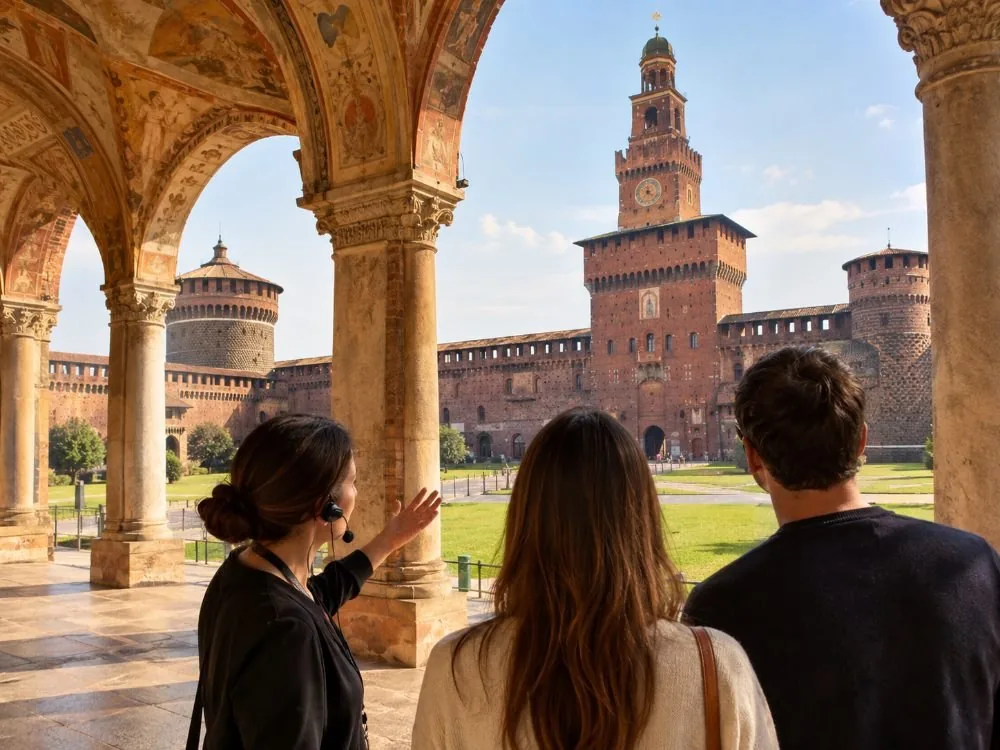 Private · 6 languages
Milan: private guided tour of Castello Sforzesco
History told in the courtyards
A guided tour of an hour and a half with a certified guide, small group with headsets, from the Pietà Rondanini to the Corte Ducale, the Rocchetta and the Torre del Filarete, ticket included.
Frequently asked questions
Who built Castello Sforzesco?
Galeazzo II Visconti built the first castle between 1360 and 1370; Francesco Sforza rebuilt it from 1450 and gave it its name. What does sforzesco mean.
Why did the tower collapse?
In 1521, the gunpowder stored inside the Torre del Filarete exploded. Today’s tower is Beltrami’s 1905 reconstruction. The tower, then and now.
Was the castle bombed?
Yes, in 1943; after the war, the BBPR studio redesigned the museums. In 1848, however, the castle—then under Austrian control—bombarded the city during the Five Days of Milan.
What remains of the outer Spanish walls?
Almost nothing: the bastions and the Ghirlanda fell in 1801 by Napoleon’s order, and the remaining parts of the Ghirlanda were demolished from 1892. The underground covered road survives, accessible only on guided tours. Merlate panoramiche and Ghirlanda.