Booking choice: The guided tour with the Pietà, from $57 per person. Check dates Tour details
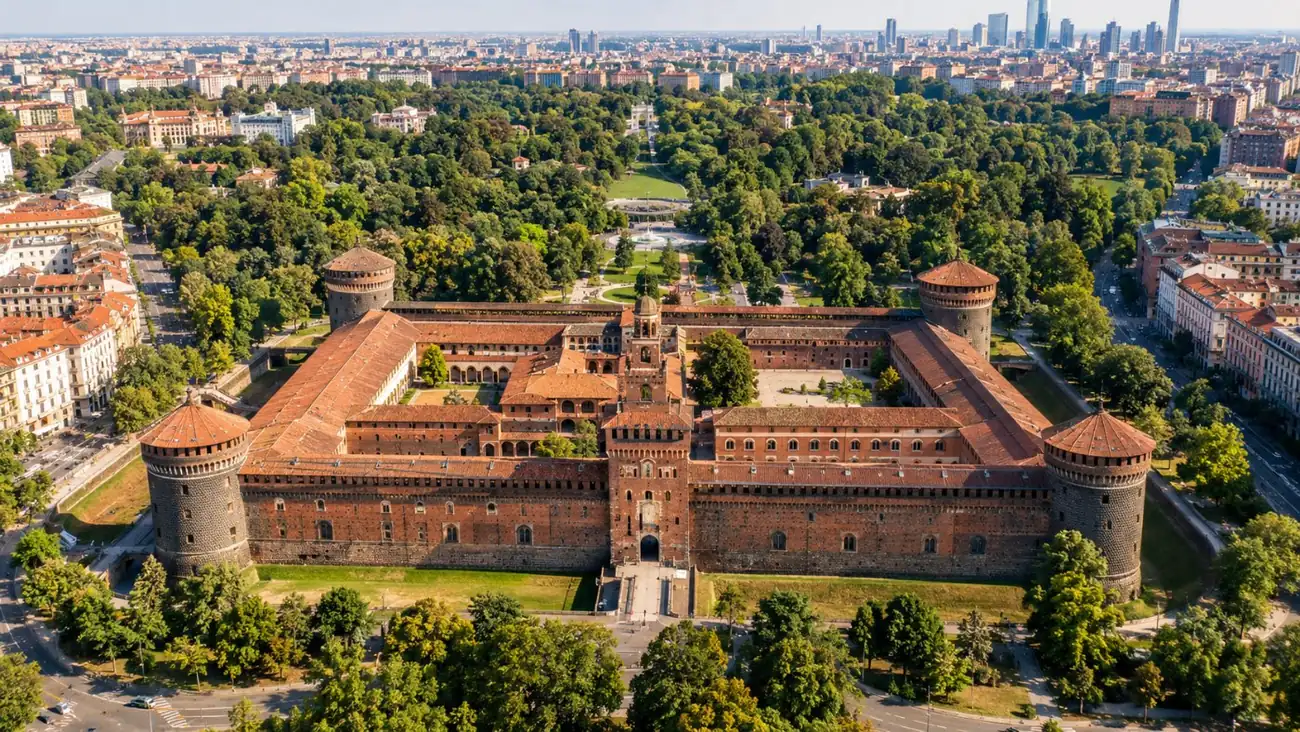
The Castello Sforzesco has been destroyed, rebuilt, blown up, garrisoned, nearly demolished and restored, all in about 550 years. Its name comes from the Sforza dukes, who held Milan for barely 85 of them, but whose rebuild of the 1450s gave the castle the shape it still has.
Dates below are checked against the regional heritage catalogue Lombardia Beni Culturali and the castle's own pages. Where good sources disagree, we say so.
The quick answer
The first castle went up in the 1360s under Galeazzo II Visconti and was torn down in 1447. Francesco Sforza began the castle you see in 1450. It became a Spanish citadel after 1535, Napoleon ordered it demolished in 1800, and Luca Beltrami restored it between the 1890s and 1905.
When was Castello Sforzesco built?
In two stages: a Visconti fortress of the 1360s, destroyed in 1447, then Francesco Sforza's rebuild from 1450. The gate tower you see today dates from 1905.
The short timeline:
| Year | What happened |
|---|---|
| 1360s | Galeazzo II Visconti builds the Castello di Porta Giovia on the city walls |
| 1447 | The last Visconti duke dies; the Ambrosian Republic tears the castle down |
| 1450 | Francesco Sforza becomes duke and starts rebuilding it as his residence |
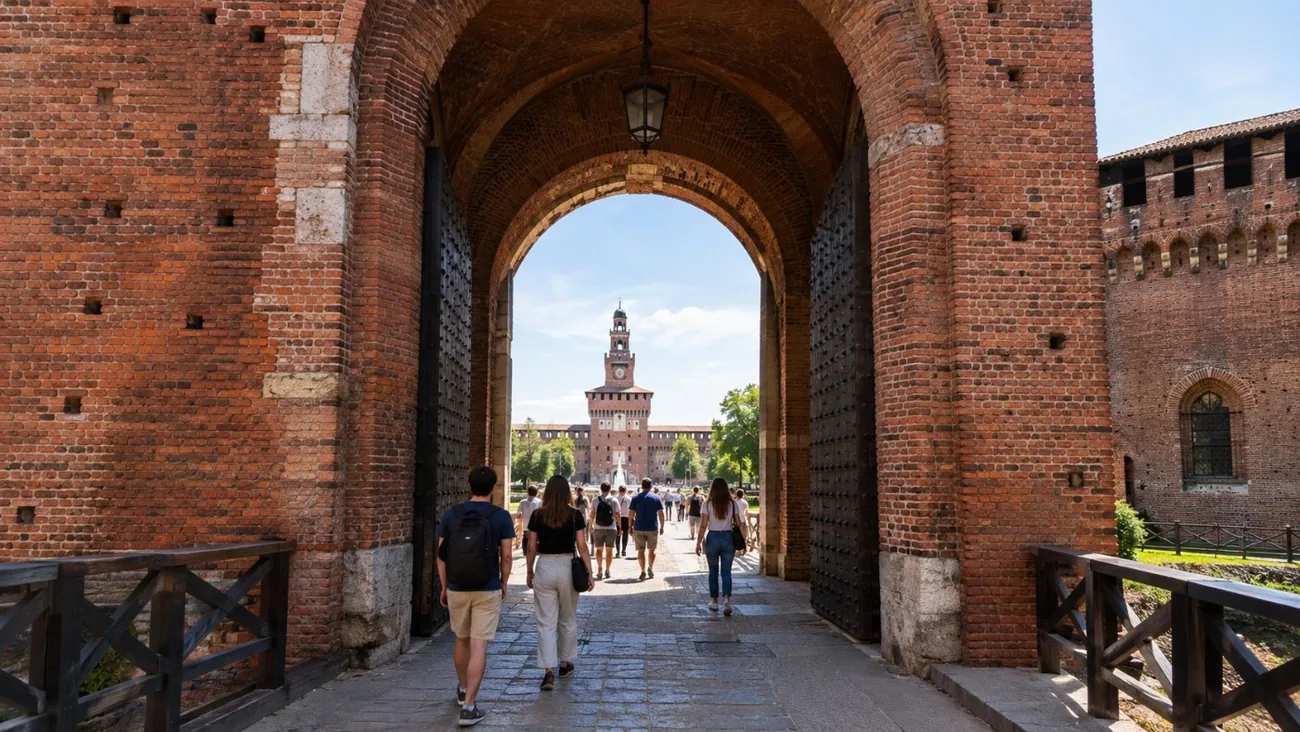
| 1452 | Filarete designs the central gate tower; the two round towers go up |
| 1476 | Galeazzo Maria Sforza is murdered; his widow builds the Torre di Bona |
| 1494 | Ludovico il Moro takes power; Leonardo and Bramante work at his court |
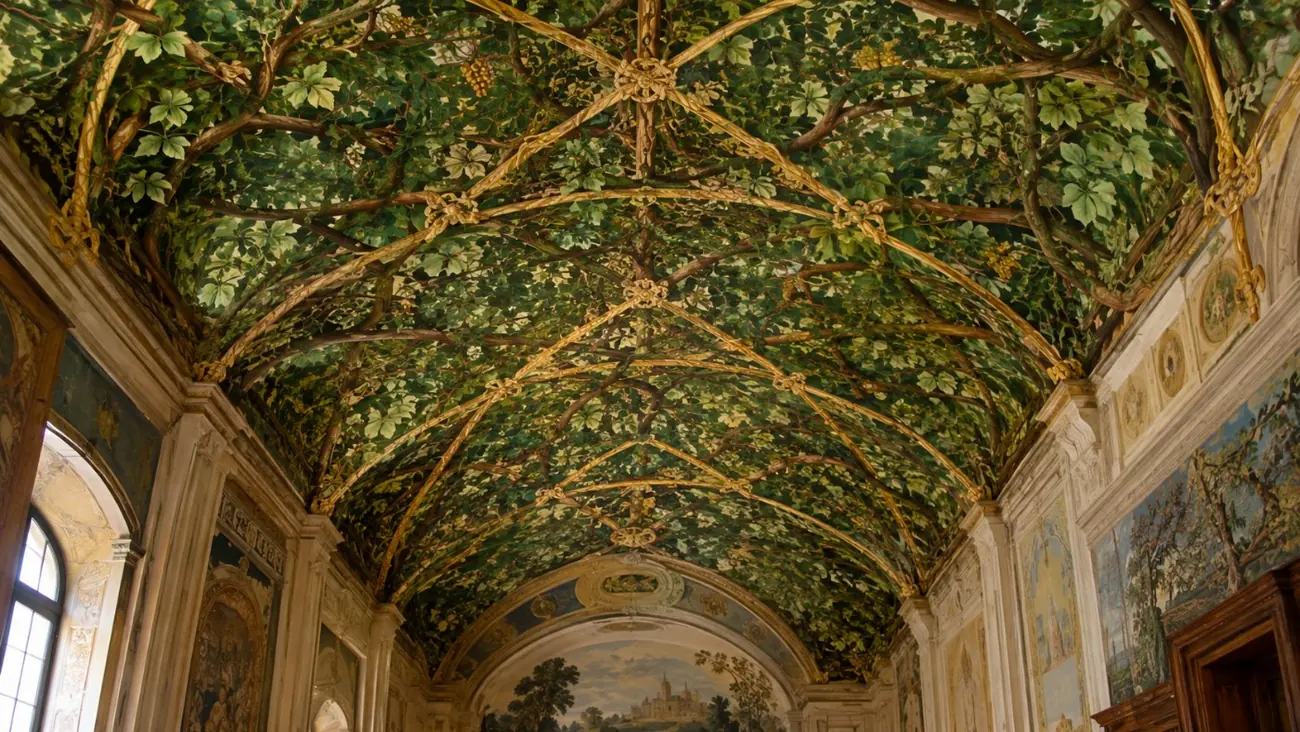
| c. 1498 | Leonardo paints the Sala delle Asse |
| 1499 to 1500 | The French take Milan; Ludovico flees |
| 1521 | Gunpowder stored in the Filarete tower explodes |
| 1535 | The last Sforza duke dies; the castle becomes a Spanish citadel |
| 1576 | The Ospedale Spagnolo, today home of the Pietà Rondanini, is built |
| 1800 | Napoleon orders the castle demolished; the bastions go from 1801 |
| 1890s to 1905 | Luca Beltrami restores the castle and rebuilds the gate tower |
| 1943 | Allied bombing badly damages the castle |
| 2015 | The Pietà Rondanini museum opens |
The Visconti start date is disputed: the regional catalogue and English Wikipedia give 1358, Italian Wikipedia 1368. "The 1360s" is the honest version.
Who built the first castle in Milan?
Galeazzo II Visconti, lord of Milan, in the 1360s. It was called the Castello di Porta Giovia, after the city gate it guarded.
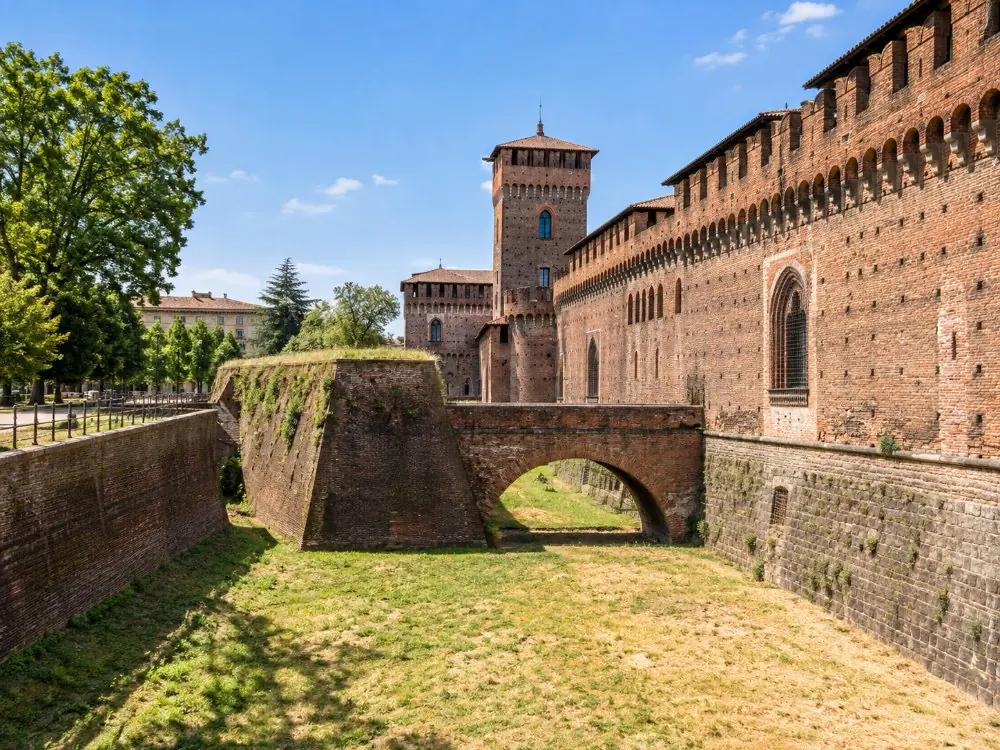
The Visconti built it as a fortress on the city walls, facing outward and inward at once: a lord of Milan needed protection from his own citizens as much as from enemies. Filippo Maria Visconti, the last of the line, made it his home.
When Filippo Maria died in 1447 without a son, the Milanese declared the Golden Ambrosian Republic and pulled down the hated castle. The republic lasted less than three years.
Why was Francesco Sforza important?
He was a mercenary general who married into the Visconti family and made himself Duke of Milan in 1450, founding the Sforza dynasty and rebuilding the castle.
Born in 1401 in Cigoli, in Tuscany, Francesco Sforza was a condottiero, a commander for hire who fought at different times for the Pope, Milan, Venice and Florence. In 1441 he married Bianca Maria Visconti, the only child of the last Visconti duke, which gave him his claim. On 26 February 1450, with the Ambrosian Republic starving and broke, he entered Milan as duke (Wikipedia).
He rebuilt the castle as his residence, hired Filarete for the gate tower in 1452, and helped broker the Peace of Lodi in 1454, which kept the Italian states in balance for decades. Few condottieri turned a military career into a stable state. He died in 1466.
Hear the Visconti and Sforza stories where they happened, then see the Pietà: live guide, entry included.
Check dates for the guided tour with the PietàWhat happened at the castle under Ludovico il Moro?
It became one of the great Renaissance courts. Ludovico, who took power in 1494, employed Leonardo and Bramante, and Leonardo painted the Sala delle Asse here around 1498.
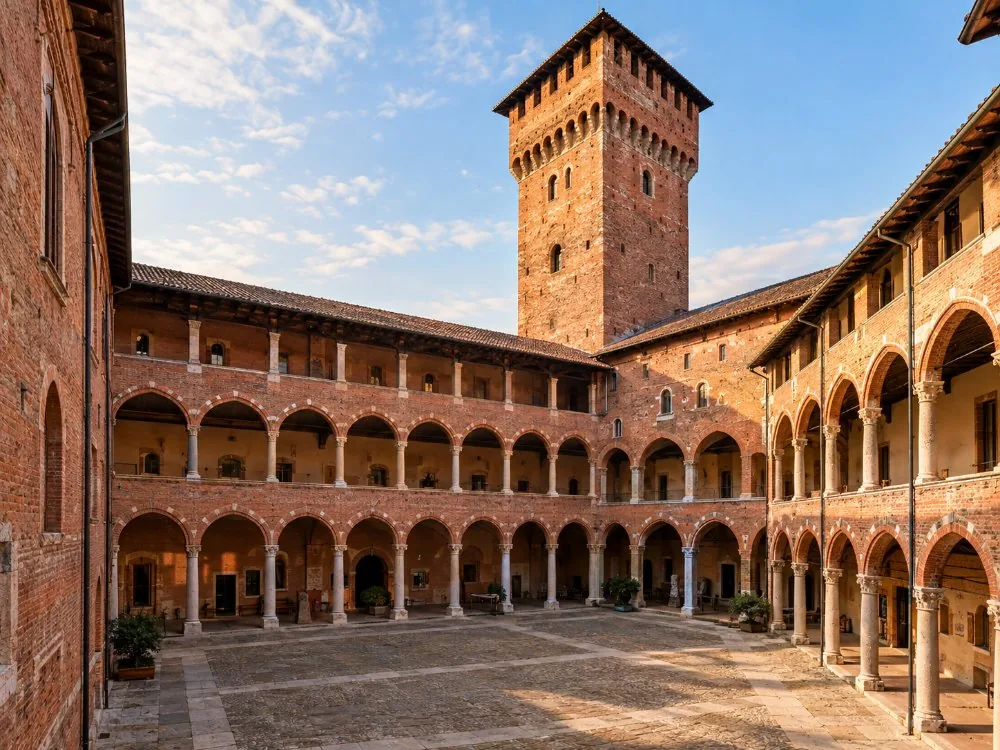
First came a murder. Francesco's son Galeazzo Maria Sforza was stabbed to death on 26 December 1476, and his widow, Bona di Savoia, moved into the Rocchetta and fortified it with the tall tower that carries her name. It also served as a prison; a cell door with a spyhole is still visible on the stairs.
Galeazzo Maria's brother Ludovico il Moro pushed Bona aside and ruled Milan, as duke from 1494. Bramante arrived in the late 1470s and Leonardo in the 1480s. Bramantino painted the fresco of Argus in the Sala del Tesoro, and Leonardo the vault of the Sala delle Asse in the Torre Falconiera. It ended badly: the French took Milan in 1499 to 1500, and Ludovico died a prisoner in France.
Why did the Filarete tower blow up in 1521?
Because it was being used as a gunpowder store. In June 1521 the powder exploded and the tower collapsed.
By then the castle was a military base, changing hands between France, the last Sforza dukes and the Habsburgs. When Francesco II Sforza died in 1535, the duchy passed to Spain, and the castle became the heart of a Spanish citadel. From 1550 star-shaped bastions were thrown up around it. The Spanish also built the hospital for the garrison in 1576, the Ospedale Spagnolo.
The Austrians, who took over in the 18th century, kept it as a garrison. For three centuries, Milan's grandest building was an army barracks.
Did Napoleon try to demolish Sforza Castle?
Yes. On 23 June 1800 he ordered it demolished. The outer bastions were razed from 1801, but the castle itself survived.
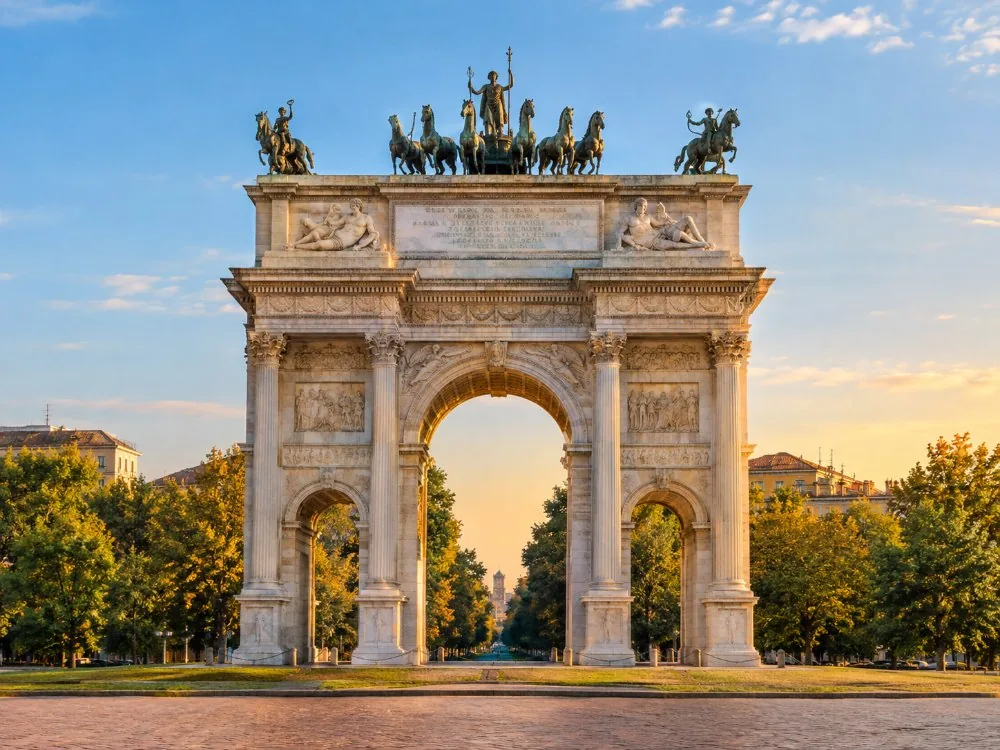
The plan was to replace the fortress with the Foro Bonaparte, a grand circular square of public buildings. It was scaled down, leaving the curved street that still carries the name, and the open ground behind the castle that later became Parco Sempione. At the far end, Napoleon's Arco della Pace was begun in 1807 and finished in 1838, by which time the Austrians had rededicated it to the Congress of Vienna.
In March 1848, during the Five Days uprising, the Austrian field marshal Radetzky shelled the city from the castle. The Milanese did not forget it.
Who saved Sforza Castle?
The architect Luca Beltrami. In the 1890s the city debated knocking it down, chose restoration, and Beltrami rebuilt it, gate tower and all, by 1905.
Beltrami worked like a historian, from old drawings and documents. His work started in 1890, 1891 or 1894 depending on the source, and ended in 1905. He rebuilt the Filarete tower from 1900 as a memorial to King Umberto I, killed at Monza in 1900, and while clearing the rooms his team found traces of Leonardo's painting in the Sala delle Asse in 1893 to 1894 (Wikipedia).
At the same time the city laid out Parco Sempione, 1888 to 1894, on the old parade ground. The castle became a museum: its collections are the ones you visit today.
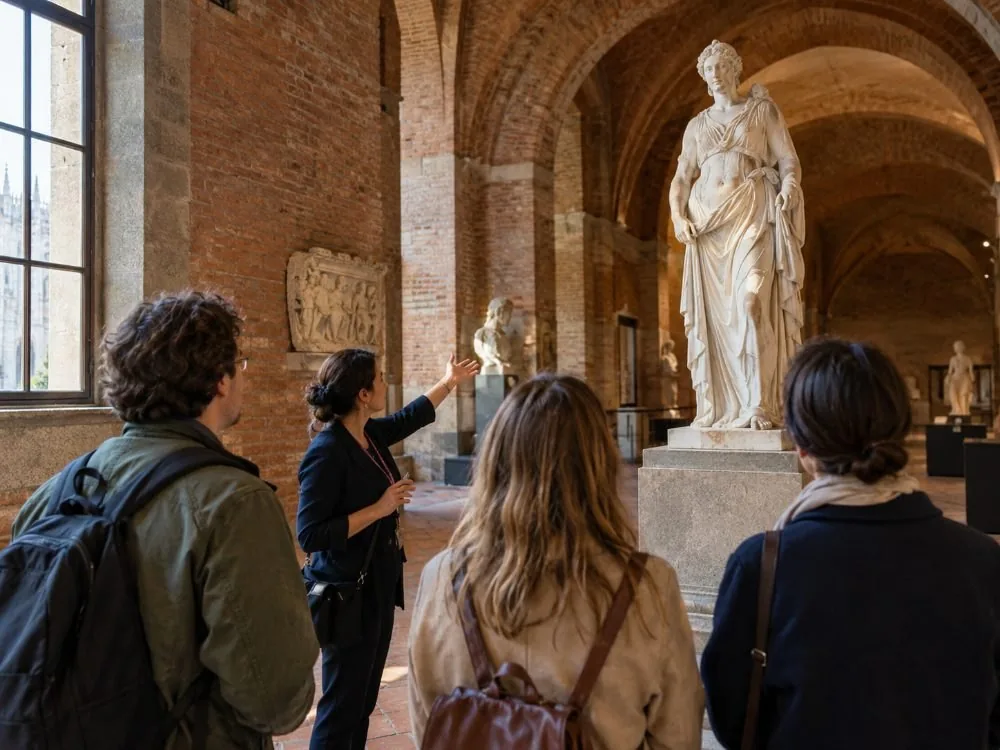
Ninety minutes on the castle's story with a live guide, from the Visconti to the Pietà Rondanini. Museum entry included.
Explore the guided tour with the Pietà Tour detailsWhy is Sforzesco Castle famous?
As the seat of Milan's Renaissance dukes, the court of Leonardo and Bramante, and the home of Michelangelo's last sculpture. It is also the busiest of the city's civic museums.
Allied bombing in August 1943 badly damaged the castle, and the restored museums reopened in stages after the war; the regional catalogue dates the completed postwar work to 1963. In 1952 the city bought Michelangelo's Pietà Rondanini, which moved into the old Spanish Hospital in 2015.
Today the courtyards are a free shortcut between the centre and Parco Sempione, used by plenty of Milanese who never buy a ticket. The museums count separately: about 236,000 entries in the first half of 2025 by one indicative count (Milano Events), ahead of every other civic museum. What to see on a visit is in our guide to the inside.
Frequently asked questions
Who lived in Sforza Castle?
The Visconti lords and then the Sforza dukes of Milan, from Francesco Sforza in 1450 to Francesco II in 1535. After that it housed Spanish, Austrian and French garrisons.
Is Sforza Castle original?
Partly. Much of the brick shell is 15th-century Sforza work, but the gate tower and many details were rebuilt by Luca Beltrami around 1900, and the castle was repaired again after 1943.
How old is the Castello Sforzesco?
The site has been a castle since the 1360s. The present building dates mainly from Francesco Sforza's rebuild, begun in 1450.
Why is it called Castello Sforzesco?
After the Sforza family, the dukes who rebuilt it from 1450. Sforzesco simply means "of the Sforza".
Ready to book
Choose your visit
Free cancellation on every option (up to 24 hours or 3 days before, see each tour). Prices are from-prices in USD and move.
Sforza Castle & Pietà Rondanini Guided Tour
- Castle and museum entrance fees
- Certified guide, live in English, Italian, German, French or Spanish
- Headphones to hear the guide
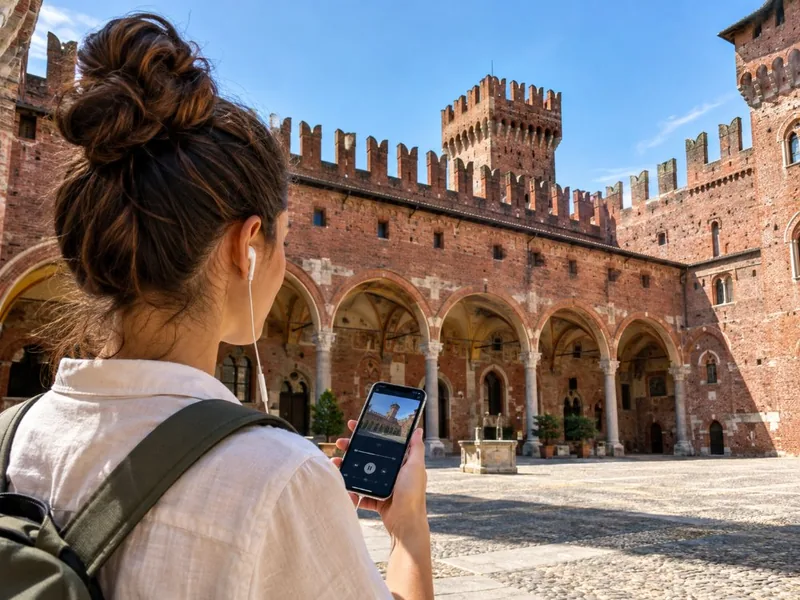
Sforza Castle Ticket with App Audio Guide
- Reserved entry to all the castle museums
- App audio guide in six languages, plus a Milan city audio tour
- Voucher swapped at the Autostradale office, Piazza Castello 1
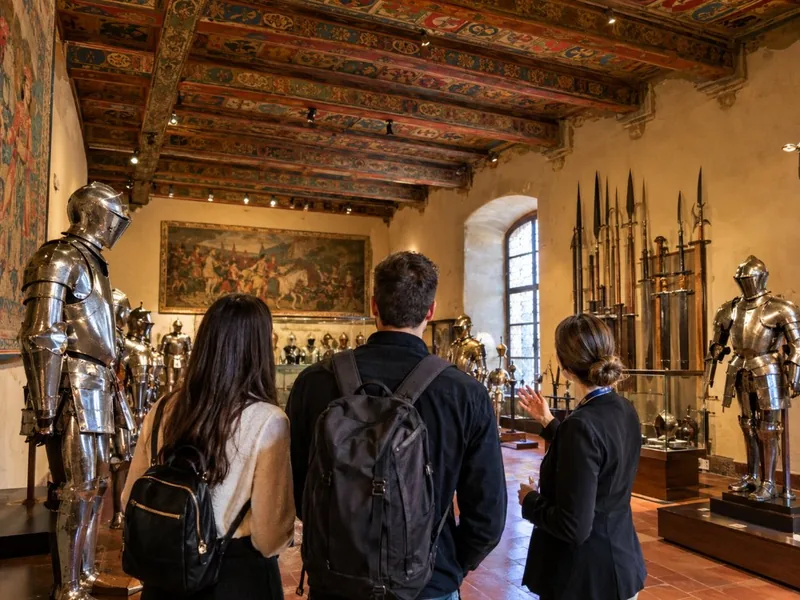
Sforza Castle & Museums Private Tour
A private guide inside the museums, at the pace you set